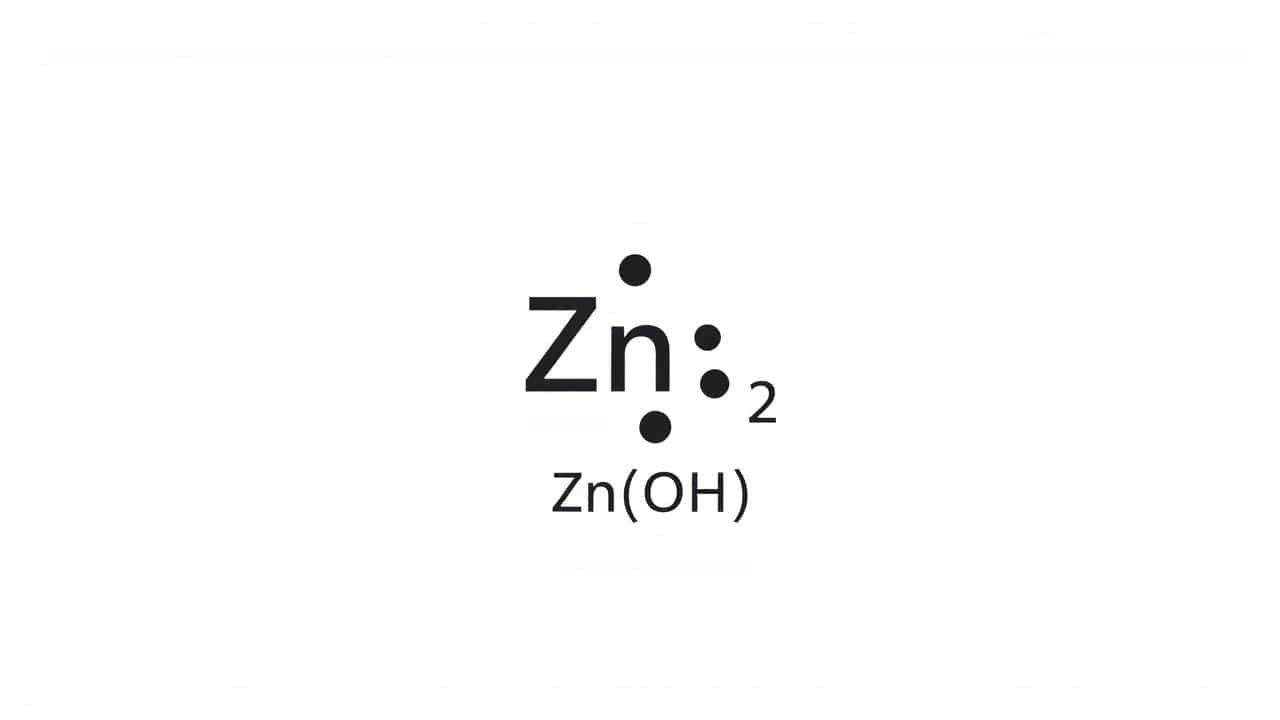
Zinc hydroxide, chemically represented as Zn(OH)₂, is an inorganic compound that consists of zinc ions (Zn²⁺) and hydroxide ions (OH⁻). It is known for its low solubility in water and its ability to behave as both an acid and a base, making it an amphoteric compound.
This topic explores the chemical name, properties, structure, solubility, and applications of zinc hydroxide in various industries.
Chemical Name and Formula of Zn(OH)₂
The IUPAC name of Zn(OH)₂ is zinc hydroxide. Its molecular formula is Zn(OH)₂, which indicates it contains:
-
One zinc (Zn²⁺) ion
-
Two hydroxide (OH⁻) ions
In aqueous solutions, Zn(OH)₂ can dissolve in both acids and bases, making it a key component in many chemical and industrial processes.
Physical and Chemical Properties of Zinc Hydroxide
Zinc hydroxide has several unique properties that determine its behavior in different conditions.
Physical Properties
| Property | Description |
|---|---|
| Appearance | White, gelatinous or powdery solid |
| Molecular Weight | 99.39 g/mol |
| Solubility in Water | Slightly soluble |
| Density | 3.05 g/cm³ |
| Melting Point | Decomposes before melting |
Chemical Properties
-
Amphoteric Nature: Zn(OH)₂ reacts with both acids and bases.
-
Thermal Decomposition: When heated, it decomposes into zinc oxide (ZnO) and water.
-
Formation from Zinc Salts: It can be precipitated by adding a strong base (NaOH or NH₄OH) to a solution of zinc salts.
Solubility and Amphoteric Behavior of Zn(OH)₂
Zinc hydroxide is sparingly soluble in water, but it dissolves in acidic and basic solutions, making it an amphoteric compound.
Reaction with Acids
Zn(OH)₂ reacts with acids to form zinc salts and water:
This reaction produces zinc chloride (ZnCl₂), a soluble salt.
Reaction with Bases
In the presence of strong bases, Zn(OH)₂ forms zincates, which are soluble:
This reaction forms sodium zincate (Na₂ZnO₂), making zinc hydroxide behave as an acid in this case.
How is Zinc Hydroxide Prepared?
Zinc hydroxide can be prepared using precipitation reactions from zinc salts and alkalis.
1. Precipitation from Zinc Salts
Zn(OH)₂ is commonly obtained by adding a base (such as NaOH or NH₄OH) to a zinc salt solution:
Here, zinc chloride (ZnCl₂) reacts with sodium hydroxide to form insoluble Zn(OH)₂ as a white precipitate.
2. Formation from Zinc Oxide
Zinc hydroxide can also be produced by dissolving zinc oxide (ZnO) in water with a weak acid:
Industrial and Commercial Applications of Zn(OH)₂
Zinc hydroxide is used in various industries, laboratories, and medical applications.
1. Medicinal and Pharmaceutical Use
-
Used in antiseptic creams and ointments for skin protection.
-
Helps in the formulation of calamine lotions for treating rashes and irritations.
2. Role in Chemical Synthesis
-
Acts as a precursor for zinc oxide (ZnO), widely used in cosmetics, paints, and electronics.
-
Used in analytical chemistry for detecting and separating metal ions.
3. Paints, Coatings, and Pigments
-
Zn(OH)₂ is a component in anti-corrosion coatings for metals.
-
Used as a white pigment in some paints and varnishes.
4. Rubber and Plastic Industries
-
Enhances heat resistance in rubber manufacturing.
-
Used in polymer stabilizers to improve durability.
5. Environmental and Water Treatment
-
Helps in removing heavy metals from wastewater.
-
Used in the precipitation of metal hydroxides in industrial effluents.
Comparison of Zinc Hydroxide with Other Metal Hydroxides
| Compound | Formula | Solubility in Water | Amphoteric Nature | Common Use |
|---|---|---|---|---|
| Zinc Hydroxide | Zn(OH)₂ | Slightly Soluble | Yes | Medicine, coatings, water treatment |
| Calcium Hydroxide | Ca(OH)₂ | Moderately Soluble | No | Cement, agriculture |
| Magnesium Hydroxide | Mg(OH)₂ | Slightly Soluble | No | Antacids, fire retardants |
| Aluminum Hydroxide | Al(OH)₃ | Insoluble | Yes | Antacids, water purification |
Among these, zinc hydroxide is unique because of its dual solubility in acids and bases.
Safety and Handling of Zinc Hydroxide
While Zn(OH)₂ is generally safe, proper handling is necessary to avoid exposure risks.
Health Hazards
-
Inhalation of Zn(OH)₂ dust may cause respiratory irritation.
-
Prolonged skin contact can cause mild irritation or dryness.
-
Swallowing large amounts may cause gastrointestinal discomfort.
Storage and Disposal Guidelines
-
Store in a cool, dry place away from strong acids and bases.
-
Dispose of according to local environmental regulations to prevent contamination.
Zinc hydroxide (Zn(OH)₂) is a versatile inorganic compound with amphoteric properties, making it soluble in both acids and bases. It is widely used in medicine, coatings, plastics, and wastewater treatment due to its corrosion resistance and chemical stability.
With its unique physical and chemical properties, Zn(OH)₂ plays an essential role in industrial processes and scientific applications.
“