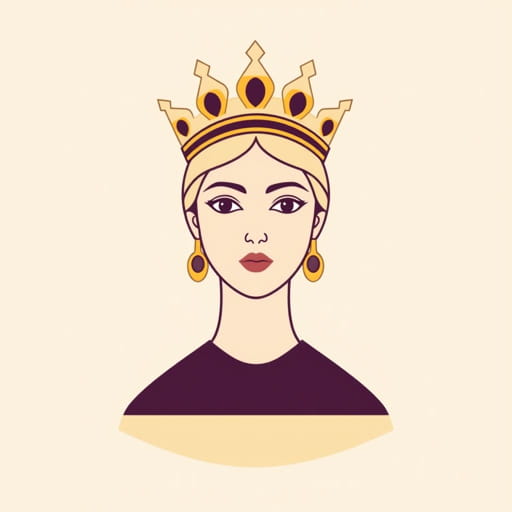
Empress Theodora of Byzantium remains one of the most influential and fascinating women in Byzantine history. Her rise from humble beginnings to the highest position in the empire as the wife of Emperor Justinian I showcases her intelligence, determination, and political savvy. Theodora was not merely a consort but a powerful co-ruler who shaped imperial policy and supported reforms that altered the course of the Byzantine Empire. Her legacy continues to captivate historians and scholars, as she broke societal norms and left a lasting impact on both the political and cultural landscape of her time.
Early Life and Background
Humble Origins
Theodora was born around 500 CE in Constantinople, the capital of the Byzantine Empire. Her father was said to have worked as a bear trainer at the Hippodrome, and her early life was marked by poverty and hardship. After her father’s death, her mother struggled to provide for the family, reportedly putting Theodora and her sisters on stage to earn a living. Theodora’s early experiences in the theater shaped her resilience and understanding of public influence.
Transformation and Travels
In her early teens, Theodora traveled through North Africa and the eastern Mediterranean, possibly as part of performance troupes or diplomatic entourages. During this time, she underwent a personal transformation, abandoning her previous life and embracing Christianity with newfound devotion. She eventually returned to Constantinople and worked as a wool spinner near the palace, where she caught the attention of Justinian, heir to the imperial throne.
Marriage to Justinian
A Unconventional Union
Theodora and Justinian married around 525 CE, and their relationship was extraordinary for the era. Justinian was deeply impressed by Theodora’s intellect, charm, and strength of character. Their union required the changing of certain laws that prohibited high-ranking officials from marrying actresses or performers, underscoring the strength of their bond and the future empress’s remarkable personal qualities.
Rise to Empress
When Justinian became emperor in 527 CE, Theodora was crowned empress alongside him. She was not a passive figurehead; she took an active role in governance and was recognized as an equal partner in rule. Her presence in court meetings and influence on imperial decisions marked a shift in the role of women in Byzantine politics.
Theodora’s Political Influence
The Nika Riots
One of the most defining moments of Theodora’s political career came during the Nika Riots in 532 CE. Discontent with government policies and corruption erupted into a violent uprising that threatened to topple the regime. Many advisers urged Justinian to flee, but Theodora stood firm. She famously declared that ‘royal purple makes a fine burial shroud,’ convincing Justinian to stay and crush the rebellion. Her courage and resolve saved the throne and preserved the empire’s stability.
Policy and Reform
Theodora was instrumental in shaping policies related to social welfare, women’s rights, and religious tolerance. She supported legislation that improved the legal status of women, including laws that expanded divorce rights and protected women from forced prostitution. She also established safe houses for former prostitutes and promoted education and employment for women, reflecting her concern for social justice and reform.
Religious and Cultural Contributions
Religious Controversy
During her reign, the empire was divided between Chalcedonian Christians and Monophysites, a sect that believed Christ had only one nature. While Justinian supported Chalcedonian orthodoxy, Theodora sympathized with the Monophysites and often acted as their protector. She secretly supported Monophysite leaders, offering them asylum and aiding in their survival during persecution. Her efforts helped prevent further division and maintained a fragile religious balance.
Patronage of the Arts
Theodora was a generous patron of the arts and architecture. She supported the construction of churches and public buildings, many adorned with rich mosaics and intricate designs. One of the most famous depictions of Theodora is the mosaic in the Basilica of San Vitale in Ravenna, Italy, where she is shown in imperial robes and surrounded by attendants. These artistic representations helped solidify her image as a powerful and regal figure in the Byzantine court.
Legacy and Historical Reputation
A Symbol of Empowerment
Empress Theodora’s legacy endures as a symbol of female empowerment and resilience. Despite the challenges of her early life, she rose to become one of the most influential women in Byzantine history. Her efforts to improve the lives of women, advocate for religious minorities, and assert political authority reshaped the Byzantine court and left a lasting impact on future generations of rulers and reformers.
Historical Interpretations
Accounts of Theodora’s life vary widely. Some sources, like the historian Procopius, provide both admiring and scandalous depictions, depending on the context. In his ‘Secret History,’ Procopius paints her in a controversial light, emphasizing her past and alleging cruelty. However, in his official works, he praises her intelligence and dedication. Despite these conflicting narratives, modern historians generally acknowledge Theodora’s importance as a powerful and complex leader.
Empress Theodora of Byzantium was more than just the wife of Justinian I she was a co-ruler, strategist, reformer, and a woman ahead of her time. From her unlikely beginnings to her position at the pinnacle of imperial power, Theodora defied societal expectations and reshaped the narrative of female authority in the ancient world. Her legacy lives on not only in the laws she influenced and the buildings she helped erect but also in the story of a woman who wielded power with conviction, intelligence, and compassion. Empress Theodora remains a timeless example of how leadership and resilience can emerge from the most unexpected circumstances.