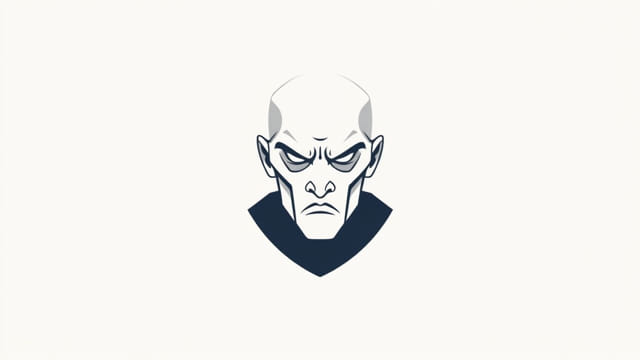
Voldemort, one of the most iconic villains in literary history, is a central figure in the Harry Potter book series written by J.K. Rowling. His real name, Tom Marvolo Riddle, becomes significant as the story unfolds, revealing a dark transformation from a brilliant student into the most feared Dark wizard of his time. The books provide a detailed and layered description of Voldemort’s background, appearance, motives, and influence on the wizarding world, allowing readers to understand the complexity behind his evil persona. His character serves not only as a symbol of fear and destruction but also as a warning about the consequences of unchecked ambition and the thirst for power.
Early Life of Tom Riddle
Born on December 31, 1926, Tom Riddle was the son of Merope Gaunt, a witch from a powerful yet troubled pure-blood family, and Tom Riddle Sr., a wealthy Muggle. His mother died shortly after childbirth, leaving him in an orphanage in London. This early abandonment and lack of affection shaped much of his psychological makeup. He discovered his magical abilities at a young age and used them to manipulate and control others, even before receiving formal training at Hogwarts School of Witchcraft and Wizardry.
Hogwarts Years
At Hogwarts, Tom Riddle was sorted into Slytherin House and quickly became known for his intelligence, charm, and exceptional magical ability. Despite his outward charisma, he was secretly obsessed with power, heritage, and the idea of immortality. During his time at the school, he uncovered the secrets of the Chamber of Secrets and unleashed the basilisk to attack Muggle-born students. His ability to hide his true nature from teachers and peers made him both admired and feared, setting the foundation for his future rise as Lord Voldemort.
Transformation into Lord Voldemort
After leaving Hogwarts, Riddle pursued dark magic, collecting followers known as Death Eaters and experimenting with the dark arts. He abandoned his birth name and assumed the identity of Lord Voldemort, a name he believed would instill fear and signify power. He split his soul into seven parts, creating Horcruxes dark magical objects that tethered his soul to the earth, rendering him nearly immortal. This unnatural act deformed both his soul and body, turning him into a figure of terror with snake-like features and a cold, pale appearance.
Physical Description
Voldemort’s appearance changed drastically over time. In his early years, he was described as handsome and magnetic. However, by the time of his full transformation, he appeared inhuman: tall and skeletal with chalk-white skin, red eyes with slits for pupils, and a flat nose resembling that of a snake. This physical change mirrored his internal corruption and served to distance him from humanity entirely.
Voldemort’s Ideology and Goals
Voldemort’s primary motivation was to achieve power and immortality. He believed in the superiority of pure-blood wizards and sought to rid the wizarding world of Muggle-borns, whom he considered inferior. Ironically, he himself was half-blood, a fact he went to great lengths to hide. His ideology was rooted in fear, dominance, and the rejection of love and human connection. Voldemort’s rise was not just a pursuit of magical power but a calculated attempt to reshape the world according to his own vision.
Key Objectives
- Control over the Ministry of Magic
- Domination of the wizarding and non-magical world
- Elimination of all opposition, especially Harry Potter
- Eradication of Muggle-born witches and wizards
Role in the Harry Potter Series
Voldemort’s presence looms over all seven books of the Harry Potter series, even when he is not physically present. From his initial defeat when Harry was an infant to his eventual return to full strength, Voldemort is portrayed as the ultimate antagonist. His actions drive much of the narrative, influencing characters’ decisions and shaping the course of events. He is responsible for countless deaths, including those of Harry’s parents, and is a constant threat to peace in the wizarding world.
Major Confrontations
- Attempted murder of baby Harry Potter, leading to his initial downfall
- Return to power in the fourth book, The Goblet of Fire
- Battle of the Department of Mysteries and the death of Sirius Black
- Takeover of the Ministry of Magic in the final book
- The Battle of Hogwarts, culminating in Voldemort’s final defeat
Symbolism and Themes
Voldemort represents more than just a villain. He is a symbol of fear, oppression, and the dangers of absolute power. His inability to understand love, friendship, and sacrifice becomes his greatest weakness. Through Voldemort, the books explore themes such as the corrupting influence of power, the importance of choice, and the value of love over fear. His character contrasts sharply with Harry Potter, who embodies resilience, compassion, and the strength found in loyalty and connection.
Lessons from Voldemort’s Story
- Power without compassion leads to destruction
- The past does not define one’s future choices matter
- Fear is a weapon that can control or be overcome
- Immortality pursued through unnatural means comes at a high cost
Legacy and Cultural Impact
Voldemort has become a cultural icon in the world of literature and beyond. His name is often used as a metaphor for evil, authoritarianism, or the loss of humanity. Phrases like He-Who-Must-Not-Be-Named reflect the fear he instills, even in fictional characters. He has been portrayed in various adaptations, from books and films to plays and fan works, continually reinforcing his position as one of the most compelling antagonists ever written.
Comparison to Other Villains
What sets Voldemort apart from other villains is the depth of his backstory and the psychological insight provided into his motivations. He is not a caricature of evil, but a carefully constructed character shaped by trauma, ego, and the rejection of empathy. This complexity allows readers to see not only the horror of his actions but also the path that led him there, providing a fuller understanding of villainy in fiction.
The character of Voldemort in the Harry Potter books is a masterful study of how ambition, fear, and a refusal to love can lead to ruin. Through detailed descriptions, emotional depth, and a powerful narrative arc, J.K. Rowling presents a villain who is both terrifying and tragically human. Voldemort’s story is essential to the series, not only as the source of conflict but as a mirror reflecting the darker side of human potential. His legacy endures as a warning and a lesson for generations of readers, illustrating the eternal battle between darkness and light.