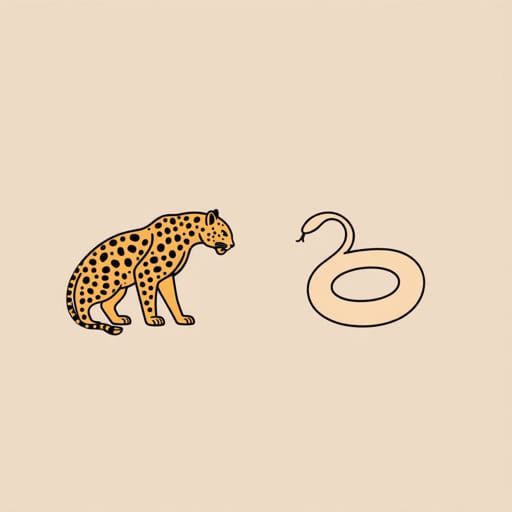
Deep in the dense tropical rainforests of Central and South America, two powerful predators may cross paths: the jaguar and the boa constrictor. Both are top-level hunters, uniquely adapted to thrive in the wild. While encounters between these two creatures are rare, the idea of a jaguar vs boa constrictor sparks curiosity and fascination. Each possesses lethal tools for survival sharp claws and powerful jaws on one side, and crushing strength and stealth on the other. Exploring their biology, behavior, and potential interactions provides a deeper understanding of how nature balances strength, strategy, and survival.
Physical Characteristics
Jaguar Overview
The jaguar (Panthera onca) is the largest cat species in the Americas and the third-largest in the world, after tigers and lions. It is recognized for its powerful build and beautifully patterned coat.
- Weight: 100250 pounds (45113 kg)
- Length: Up to 6 feet (1.8 meters), not including the tail
- Bite Force: Strongest among all big cats, capable of crushing bones and skulls
- Claws: Retractable, razor-sharp, used for gripping and tearing
Boa Constrictor Overview
The boa constrictor (Boa constrictor) is a large non-venomous snake found in similar habitats to the jaguar. It kills prey by constriction, not venom, making it a silent but deadly predator.
- Length: 6 to 13 feet (1.8 to 4 meters)
- Weight: 3060 pounds (1327 kg), though larger specimens can weigh more
- Muscle Strength: Can exert enough pressure to stop blood flow and suffocate prey
- Camouflage: Mottled coloring helps it blend into forest floor or tree cover
Habitat and Behavior
Jungle Territories
Both species share overlapping ranges in rainforests, river basins, and tropical lowlands. Jaguars tend to roam wide territories, while boas are more sedentary, lying in wait for prey along animal trails or water sources.
Behavioral Differences
- Jaguar: Solitary, nocturnal, and opportunistic hunter; swims well and climbs trees when needed.
- Boa Constrictor: Ambush predator, also solitary; may be terrestrial or arboreal depending on age and region.
Despite their shared habitat, their hunting methods differ dramatically jaguars rely on stealth and speed, while boas depend on patience and power.
Hunting and Diet
Jaguar Diet
Jaguars are apex predators and feed on a wide range of animals, including deer, capybaras, peccaries, fish, birds, and reptiles. They are known for their unique method of killing prey by biting directly through the skull.
Boa Constrictor Diet
Boas feed on rodents, birds, bats, lizards, and occasionally larger animals like monkeys or pigs. They capture prey using sharp teeth to grab and then coil tightly around the body, applying pressure until the prey stops breathing.
Jaguar vs Boa Constrictor: A Hypothetical Encounter
Who Has the Advantage?
In a jaguar vs boa constrictor confrontation, several factors would influence the outcome, including the size of each animal, the location of the encounter, and who strikes first. Jaguars have the advantage of intelligence, speed, and sheer strength, while boas rely on surprise, constriction, and stamina.
Scenarios
- Ambush by the Boa: If a boa were to strike first and wrap itself around a jaguar, especially a smaller or young one, the constrictor could potentially suffocate it. However, this is highly unlikely with a full-grown jaguar.
- Jaguar Attacks First: A jaguar can use its immense bite force to crush a snake’s skull or vertebrae with a single bite, particularly to the head or neck region. This would almost certainly end the fight instantly.
Overall, the jaguar usually holds the upper hand due to agility, stronger predatory tools, and superior tactical instincts.
Documented Interactions
Rare but Real
Although direct battles are rare and not often observed in the wild, there have been anecdotal reports and occasional video evidence showing jaguars hunting large snakes, including boa constrictors and anacondas. Jaguars are known for tackling difficult prey and are not deterred by the risk of injury.
Prey or Predator?
- Boas may prey on small mammals, birds, or reptilian juveniles, including baby jaguars if left unattended.
- Jaguars have been recorded killing and eating boas, especially during times when larger prey is scarce.
The interaction largely depends on size and circumstance, but adult jaguars almost always dominate.
Symbolism and Cultural Impact
Jaguar in Culture
Jaguars hold great symbolic significance in indigenous mythology across Latin America. Seen as gods of the jungle and symbols of power, they represent stealth, strength, and protection.
Boa in Culture
Boa constrictors also appear in local folklore, often associated with danger, mystery, and guardianship of the forest. They are both feared and respected by local communities.
Both animals are vital symbols in their ecosystems and mythologies, reflecting the delicate balance of predator and prey in nature.
Conservation Status
Jaguars
Classified as Near Threatened by the IUCN, jaguars face threats from deforestation, poaching, and conflict with humans. Conservation efforts focus on preserving habitats and creating wildlife corridors.
Boa Constrictors
Boas are not currently endangered but face habitat loss and are often targeted in the exotic pet trade. In some areas, they are also killed out of fear or misunderstanding.
- Protecting forests: Critical for the survival of both species
- Education: Helps reduce unnecessary killing and encourages coexistence
The jaguar vs boa constrictor matchup is more than a wild fantasy it is a reflection of nature’s complex web of survival and adaptation. While a jaguar would most likely triumph in a one-on-one encounter, the boa constrictor remains a formidable predator in its own right. Each has evolved in unique ways to thrive in the same environment. Their occasional conflict is not just a battle of strength, but also one of instinct, strategy, and evolutionary success. Appreciating these magnificent creatures helps us better understand the balance of power within the rainforest and the importance of conserving their shared habitat.