The concept of the half equivalence point is fundamental in acid-base titrations and is especially important for understanding buffer systems and pH control in chemistry. It refers to the moment during a titration when half of the analyte (typically a weak acid or weak base) has been neutralized by the titrant. At this precise point, a remarkable and useful chemical balance occurs that offers insight into the pKa value of the acid or base. Students, chemists, and laboratory professionals all benefit from a solid understanding of what happens at the half equivalence point and how it can be used in various chemical calculations and experiments.
Understanding the Half Equivalence Point
Definition and Basic Concept
The half equivalence point occurs in an acid-base titration when exactly half of the acid (or base) has been neutralized. For a weak acid being titrated with a strong base, this means that the concentration of the remaining weak acid equals the concentration of its conjugate base. Mathematically, this is the point where:
- [HA] = [A⁻]
At this point, the solution forms a buffer, and the pH can be calculated using the Henderson-Hasselbalch equation.
Importance in Titrations
This point is significant because it allows for a direct calculation of the acid dissociation constant, or pKa. Since the logarithm of 1 is zero, the equation simplifies to:
pH = pKa
Thus, the pH of the solution at the half equivalence point is numerically equal to the pKa of the weak acid.
Visualizing the Half Equivalence Point on a Titration Curve
Shape of a Titration Curve
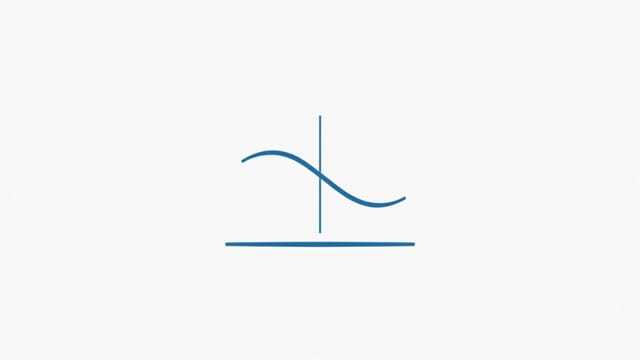
In a titration involving a weak acid and a strong base, the titration curve starts with a low pH and gradually rises as the base is added. A characteristic buffer region appears before a sharp increase around the equivalence point. The half equivalence point is located in the middle of the buffer region, well before the steep rise in pH.
Key Observations
- Occurs at half the volume of titrant needed to reach the equivalence point.
- The slope of the titration curve is relatively flat at this stage.
- Maximum buffering capacity is observed.
Henderson-Hasselbalch Equation and the Half Equivalence Point
Equation Overview
The Henderson-Hasselbalch equation is a key tool used in acid-base chemistry. It is written as:
pH = pKa + log([A⁻]/[HA])
At the half equivalence point, since [A⁻] = [HA], the equation simplifies:
pH = pKa + log(1) = pKa
Buffer Systems and Stability
Because both the weak acid and its conjugate base are present in equal concentrations, the solution resists changes in pH, acting as a buffer. This is particularly important in biological and chemical systems where maintaining a stable pH is essential.
How to Identify the Half Equivalence Point Experimentally
Step-by-Step Titration Method
To determine the half equivalence point in a laboratory setting, follow these steps:
- Perform a titration with a known concentration of titrant.
- Record the pH as the titrant is added incrementally.
- Plot a titration curve (pH vs. volume of titrant).
- Identify the equivalence point where the steepest change in pH occurs.
- Locate the point where half the volume of titrant has been added this is the half equivalence point.
Using a pH Meter
A pH meter can provide accurate data during titration. By monitoring the pH in real-time, the half equivalence point can be determined as the point where the pH equals the known or calculated pKa of the acid.
Applications in Real-World Chemistry
Buffer Preparation
Knowing the half equivalence point allows chemists to prepare buffer solutions with a known and stable pH. This is especially useful in biochemical experiments, fermentation processes, and pharmaceutical manufacturing where pH control is vital.
Determining pKa of Unknown Acids
In analytical chemistry, titrating an unknown weak acid and identifying the pH at the half equivalence point allows for direct determination of its pKa. This is an important step in identifying substances and understanding their behavior in solution.
Biological Systems
In physiological systems, the concept of buffering is crucial. The human body maintains blood pH through buffer systems that operate near their half equivalence point to resist changes in acidity, particularly the bicarbonate buffer system.
Half Equivalence Point vs. Equivalence Point
Differences Between the Two
While the equivalence point marks the complete neutralization of the acid or base, the half equivalence point marks the midpoint of this reaction. Their key differences include:
- Equivalence Point: All analyte is neutralized; dramatic change in pH
- Half Equivalence Point: Half analyte neutralized; pH = pKa
Why the Half Point Matters More for Weak Acids
For strong acid-strong base titrations, the half equivalence point is less significant due to the lack of buffering. However, in weak acid-strong base titrations, it offers valuable insight into acid strength and buffering capacity.
Common Misconceptions
pH Always Equals 7 at Half Equivalence Point
This is incorrect. The pH at the half equivalence point is only equal to the pKa of the acid. For weak acids, this value is usually below 7. The pH only equals 7 at the equivalence point of a strong acid and strong base titration.
Half Equivalence Means Half the Reaction is Over
It may seem like a midpoint in time or reaction, but it’s specifically referring to the stoichiometric point where half the analyte has reacted with the titrant. It’s a very precise chemical condition, not a temporal one.
The half equivalence point plays a critical role in the science of titration, especially when dealing with weak acids and bases. It provides a reliable method to determine the pKa of an acid and is foundational in buffer chemistry. Understanding this concept enhances your ability to conduct accurate chemical analysis, create stable buffer solutions, and grasp the fundamental behavior of acids and bases in solution. From the laboratory bench to biological systems, the half equivalence point remains an essential concept in the world of chemistry.