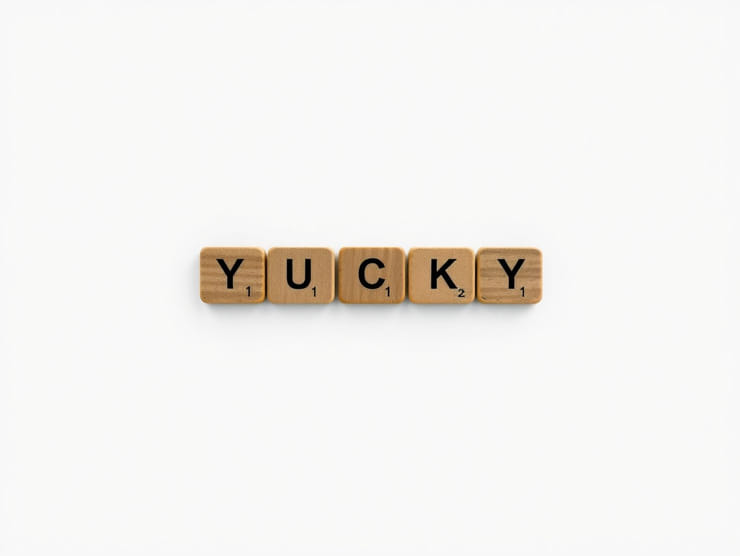
Scrabble players often come across playful or informal words and wonder if they’re acceptable for use in the game. One such word is yucky, a term often used by children or in casual conversation to describe something unpleasant, gross, or distasteful. Despite its informal tone, many players are surprised to discover that some slang or colloquial words are actually valid in Scrabble. Knowing which words are accepted can give players a real advantage when trying to get rid of tricky tiles like Y or K. That brings us to an interesting question worth exploring: is yucky a Scrabble word?
What Does the Word Yucky Mean?
Definition and Usage in Everyday Language
Yucky is an adjective used to describe something that is disgusting, repulsive, or generally unpleasant. It’s most commonly used by children, but it has also found a place in informal adult speech. For example, someone might say, That soup tastes yucky, or This smells really yucky. While it’s not typically used in formal writing, it is widely understood in casual contexts and has long been part of spoken English.
Origins and Recognition
The word yucky likely evolved as a child-friendly form of the word yuck, which is itself an exclamation expressing disgust. Over time, yucky became a legitimate adjective form, and it has since been included in several reputable dictionaries. This inclusion is crucial when considering whether or not a word is eligible for use in Scrabble.
Is Yucky a Valid Scrabble Word?
Scrabble Dictionary Approval
Yes, yucky is an official word in Scrabble. It is listed in both the Official Scrabble Players Dictionary (OSPD) and the Collins Scrabble Words (CSW), which are the primary references for Scrabble legality. As long as your game follows the rules based on one of these dictionaries, you can confidently place yucky on the board without fear of a challenge.
This might come as a surprise to players who assume Scrabble is limited to formal or academic vocabulary. In truth, the game allows a broad range of word types, including slang, regional dialects, and even some exclamations, as long as they are listed in the approved word lists.
Points Value of Yucky in Scrabble
Now that we know yucky is a legal word in Scrabble, let’s break down its point value:
- Y = 4 points
- U = 1 point
- C = 3 points
- K = 5 points
- Y = 4 points
Altogether, the base value for yucky is 17 points. That makes it a high-scoring five-letter word, especially useful when played across a double or triple word score square. The K and two Y letters are particularly powerful, making yucky a strategic word for maximizing your score.
Strategic Benefits of Playing Yucky
Using High-Value Letters
One of the main reasons to play yucky in Scrabble is the opportunity to use high-value tiles. The K and Y tiles are among the highest-scoring single letters in the game. By placing yucky on the board, you make use of both and score big even without hitting a bonus square.
Limited Vowel Dependency
Yucky contains only one traditional vowel, U, and relies on the consonant Y in place of another vowel sound. This makes it especially useful if you are stuck with few vowels but have strong consonants. It gives players more options during tight game situations where vowel tiles are limited or difficult to work with.
Play Opportunities and Extensions
While yucky does not have many commonly used extensions, you could use it in a sentence-like phrase such as yucky food by adding other short words around it. In Scrabble terms, you can also add suffixes or form a plural (yuckies is sometimes accepted in informal use, though not standard in Scrabble) depending on your dictionary rules. However, the standalone word yucky is already strong and usually best used as-is.
Common Reactions and Misconceptions
Informal Words in Scrabble
Some players are unsure whether informal or childish-sounding words like yucky are allowed. They may challenge such plays thinking they’re not valid. However, this is a mistake. As long as the word is listed in the accepted dictionaries, it doesn’t matter how formal or informal it sounds. Yucky is a perfect example of how everyday vocabulary can become an asset during gameplay.
Risk of Challenges
In competitive Scrabble, if an opponent challenges a word like yucky and it’s confirmed to be valid, the player who made the challenge loses their turn. Knowing that yucky is valid can give you confidence when playing it and possibly earn you a tactical advantage if your opponent doubts your play.
Enhancing Your Scrabble Vocabulary
Other Informal Words That Are Valid
If you like playing words like yucky, here are a few more informal or slang-style words that are accepted in Scrabble and could help you expand your list of playable options:
- Yuck
- Zap
- Wow
- Oops
- Haha
- Gosh
These words might not appear in academic papers, but they’re fair game on the Scrabble board. That’s why reviewing the dictionary ahead of time or practicing with word lists can be an effective way to improve your Scrabble skills.
Building a Broader Strategy
Words like yucky aren’t just useful because of their point value they’re also helpful in creating a flexible, adaptive gameplay strategy. Learning how to make the most of short, fun, or unusual words can boost your score and make the game more enjoyable overall. Instead of waiting for long or complex words, sometimes the best play is a simple one that makes efficient use of your letters and hits the right squares.
Yucky is definitely a valid Scrabble word, and it offers great scoring potential thanks to its high-value letters and unique combination of vowels and consonants. Though it’s informal and often associated with childlike speech, it is fully recognized in both major Scrabble dictionaries. The next time you find yourself holding a K or Y and wondering what to do, remember that yucky could be your key to turning the game in your favor.
Beyond its score, the word yucky serves as a reminder that Scrabble isn’t limited to formal vocabulary. It’s a dynamic game that rewards creativity, quick thinking, and knowledge of words from all parts of everyday language. Keep yucky in your mental word bank you never know when it might save your turn or give you that crucial winning edge.