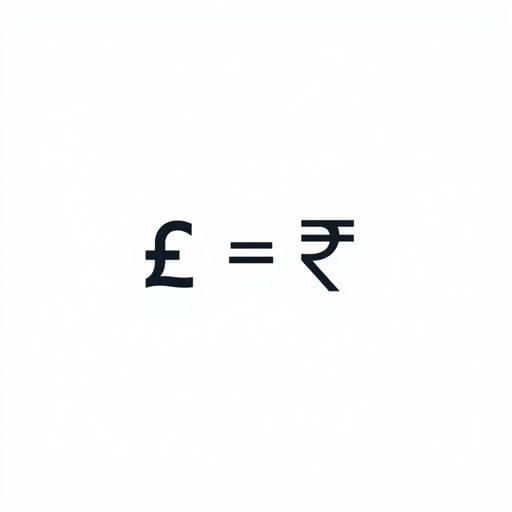
The exchange rate between the British Pound (GBP) and the Indian Rupee (INR) is a crucial metric for individuals and businesses engaged in international trade, travel, investments, and remittances between the United Kingdom and India. With a rich history of trade and economic interaction, fluctuations in this currency pair can have widespread implications. Understanding what influences the British Pound to Indian Rupee rate, how it impacts various sectors, and what trends are emerging in 2024 is essential for informed financial decision-making.
Historical Context of GBP to INR
The British Pound has long held a strong value relative to the Indian Rupee. This dynamic is rooted in historical, economic, and structural differences between the two economies. Since India’s independence in 1947, the Rupee has gradually depreciated against the Pound due to inflation, interest rate differentials, economic growth patterns, and capital flows.
In the early 1990s, liberalization policies in India led to more market-driven exchange rates. Since then, the GBP/INR pair has experienced volatility influenced by both global and domestic events. In recent years, the value of the British Pound to Indian Rupee has typically ranged between ₹85 to ₹105, depending on geopolitical events, central bank actions, and macroeconomic trends.
Factors Influencing the GBP to INR Exchange Rate
There are multiple factors that drive the daily, weekly, and long-term movements in the GBP to INR exchange rate. These factors span both the British and Indian economies, as well as global market sentiments.
1. Interest Rates
One of the primary drivers of currency value is the interest rate differential between two countries. If the Bank of England raises interest rates while the Reserve Bank of India keeps them steady or lowers them, the Pound typically strengthens against the Rupee. This is because higher interest rates attract more foreign capital.
2. Inflation Rates
A country with a lower inflation rate generally sees its currency appreciate in the long run. If inflation in the UK is lower than in India, the British Pound gains strength. Persistent inflation in India tends to weaken the Rupee over time.
3. Economic Performance
Strong GDP growth, low unemployment, and high consumer confidence support a currency’s strength. If the UK economy outperforms expectations and India struggles with fiscal deficits or weak exports, the Pound is likely to rise against the Rupee.
4. Political Stability
Political developments such as Brexit negotiations, Indian general elections, or policy reforms can create uncertainty and volatility. Stable governance often supports currency strength, while political risk leads to depreciation.
5. Trade Balance and Current Account
If the UK imports more than it exports to India, there is increased demand for the Rupee, which can strengthen it. Conversely, India’s trade deficit with the UK can put pressure on the Rupee.
6. Foreign Investment and Remittances
India receives significant inward remittances and foreign direct investments. Sudden changes in capital flow, such as the withdrawal of foreign investment, can weaken the Rupee. Meanwhile, portfolio flows into the UK affect the strength of the Pound.
Impact of GBP to INR Fluctuations
Changes in the GBP to INR exchange rate affect a wide variety of stakeholders, from tourists and students to large corporations and investors.
For Indian Students and Tourists in the UK
- A weaker Rupee means higher tuition fees and living costs in Pound terms.
- Currency fluctuations can impact the affordability of study abroad plans.
For Importers and Exporters
- Indian businesses importing goods from the UK face higher costs when the Rupee weakens.
- Exporters may benefit as their goods become more competitively priced for UK buyers.
For Investors and Forex Traders
- Currency traders can take advantage of GBP/INR volatility for profit opportunities.
- Investors in UK assets face currency risk when converting INR to GBP and vice versa.
2024 Trends and Outlook
In 2024, the British Pound to Indian Rupee exchange rate is expected to remain sensitive to several key developments. Central bank actions, particularly from the Bank of England and Reserve Bank of India, will be closely watched. Any interest rate hikes or policy changes will influence investor behavior and capital flows.
Additionally, the global economic outlook, especially in light of inflation control efforts and post-pandemic recovery, will shape currency movements. If the UK economy shows resilience while India faces external shocks such as oil price increases or reduced exports, the Pound may strengthen further.
On the other hand, India’s continued growth in services, digital economy, and manufacturing under initiatives like ‘Make in India’ could attract foreign capital, supporting the Rupee.
Key Events to Monitor
- Bank of England monetary policy meetings
- Reserve Bank of India repo rate decisions
- UK inflation and employment data
- India’s balance of payments and fiscal deficit
- Geopolitical tensions and energy market volatility
Tools to Track GBP to INR Rates
For anyone needing to keep a close watch on this exchange rate, there are several options. Most major banks and financial platforms offer real-time currency conversion tools. Additionally, currency exchange apps and forex market trackers provide live updates, historical charts, and forecasting models.
Tips for Currency Exchange
- Monitor trends and exchange rates over a period before converting large amounts.
- Compare rates across different banks or forex dealers to find the best deal.
- Consider using hedging tools or forward contracts to lock in favorable rates for future use.
The British Pound to Indian Rupee exchange rate is influenced by a range of complex factors including interest rates, inflation, economic performance, and political developments. As the global economy continues to evolve, the GBP/INR pair remains one of the most actively watched currency rates in international finance. Whether you’re a student planning to study in the UK, a business importing British products, or an investor seeking to diversify globally, understanding this exchange rate can help you make smarter financial decisions in 2024 and beyond.