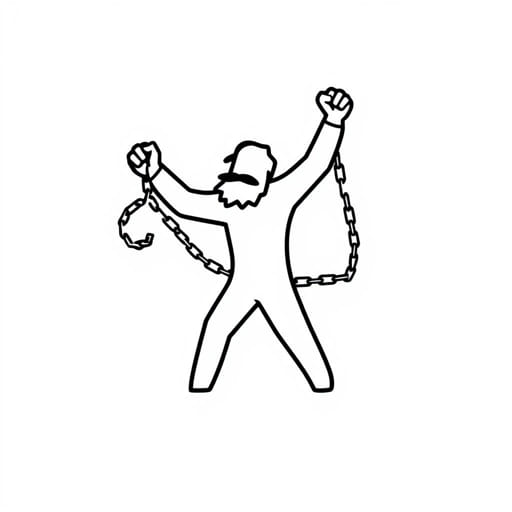
Unburdened by What Has Been Interpreting Karl Marx’s Vision of Historical ChangeThe phrase unburdened by what has been captures a powerful idea the possibility of breaking free from historical weight. For Karl Marx, history is not just a record of the past it is a force that shapes societies, class structures, and human consciousness. Yet, within his writings lies a hope that humanity can eventually liberate itself from oppressive traditions, systems, and ideologies.
To understand Marx fully, one must explore his belief that the future is not bound to repeat the past. His ideas were not only about critique but also about transformation.
Historical Materialism The Engine of Social Change
At the core of Marx’s philosophy is historical materialism, the idea that material conditions such as labor, production, and economic systems shape society’s structure and ideology.
Marx argued that history moves through stages from feudalism to capitalism, and eventually, to socialism and communism. Each stage emerges from conflict, especially between classes. This dialectical progression, he believed, was not set in stone but driven by contradictions that could eventually lead to radical change.
This perspective positions people not as passive victims of history but as active agents capable of reshaping their reality.
The Weight of the Past in Marx’s Writings
In The Eighteenth Brumaire of Louis Bonaparte, Marx famously wrote that the tradition of all dead generations weighs like a nightmare on the brains of the living. He believed that old ideologies such as religion, monarchy, or bourgeois culture often persisted even when the material conditions that created them had changed.
These lingering elements, or superstructures, keep people attached to outdated beliefs and power structures. To be unburdened, in Marx’s view, meant developing class consciousness and recognizing the need for revolution.
Capitalism A System in Crisis
Marx viewed capitalism as a dynamic but ultimately unsustainable system. While it encouraged innovation and production, it also created deep inequalities, alienation, and exploitation.
Workers, or the proletariat, were separated from the value of their labor. They became cogs in a machine that benefited the capitalist class (bourgeoisie), which controlled the means of production. According to Marx, this system could not continue indefinitely. Its internal contradictions would lead to crises, opening the door to revolutionary change.
In this sense, to be unburdened by what has been meant breaking the chains of capitalist exploitation and imagining a different, freer future.
Alienation and Human Potential
One of Marx’s most humanistic ideas is his theory of alienation. Under capitalism, people become estranged from their work, from others, and from their own potential. Labor becomes a commodity, and creativity is stifled.
Marx envisioned a future where labor would no longer be a source of suffering but an expression of human freedom. This vision involves reclaiming agency letting go of the historical conditions that keep people from realizing their true selves.
In a post-capitalist society, individuals would not be defined by class or status. They would be free to pursue meaningful work, relationships, and life paths.
The Role of Revolution
To shed the burdens of the past, Marx emphasized the necessity of revolution. He didn’t believe that gradual reforms would be enough to dismantle oppressive systems. True transformation required a radical restructuring of society.
But revolution was not just violence or uprising it was a reawakening of collective consciousness. When people recognize their shared interests, they can unite to challenge entrenched systems. This collective action, according to Marx, would usher in a new era.
In that new world, the legacy of inequality, exploitation, and class hierarchy would no longer dictate human life.
Marx and the Future Hope, Not Fatalism
While Marx is often portrayed as a harsh critic of society, his vision was deeply rooted in hope. He believed that by understanding the forces that shaped the past, people could seize control of their destiny.
Being unburdened by what has been doesn’t mean forgetting history. It means learning from it recognizing patterns of oppression and choosing to build something better.
In his imagined future, people would live in harmony with one another, not governed by profit or domination, but by mutual respect and shared purpose.
Criticism and Legacy
Of course, Marx’s theories have sparked intense debate. Some argue that his predictions did not fully account for human complexity or the adaptability of capitalism. Others point out the authoritarian regimes that emerged in his name, diverging from his original ideals.
However, his core insights about class struggle, economic injustice, and the power of collective action continue to resonate today. Modern movements for social justice, labor rights, and equality still draw upon Marx’s critique of power and his call for emancipation.
Conclusion Choosing to Create a New World
To live unburdened by what has been is to confront the past, challenge the present, and imagine the future. For Karl Marx, this was not just philosophy it was a call to action.
He asked people to look beyond inherited ideologies and to question systems that benefit the few at the expense of the many. He believed that change is possible, not inevitable, and that the power to transform society lies in the hands of the people.
In a world still grappling with inequality, environmental crisis, and political unrest, Marx’s vision invites reflection. Are we willing to let go of the structures that no longer serve us? Can we imagine and build a world where freedom, justice, and dignity are not the dreams of a few but the reality of all?
Being unburdened by what has been may not be easy. But perhaps, it is the very path to becoming more fully human.