Types of Cells Found in the Salivary Glands Structure and Function ExplainedSalivary glands are an essential part of the human digestive system. They are responsible for producing and secreting saliva, which plays a crucial role in digestion, oral hygiene, and lubrication of food. To perform their functions effectively, salivary glands are made up of different types of specialized cells. Each cell type has a distinct role in the production and modification of saliva.
This topic explores the kinds of cells found in salivary glands, their structure, and how they work together to maintain healthy oral and digestive function.
Overview of Salivary Glands
Humans have three major pairs of salivary glands
-
Parotid glands
-
Submandibular glands
-
Sublingual glands
In addition to these, there are numerous minor salivary glands located throughout the mouth and throat. All these glands contain ducts and acini made up of specific types of cells that contribute to the composition of saliva.
Main Types of Cells in Salivary Glands
There are three primary types of cells commonly found in salivary glands
-
Serous cells
-
Mucous cells
-
Myoepithelial cells
Each type of cell has unique features and contributes differently to the overall function of the glands.
Serous Cells Protein-Rich Secretions
Structure and Location
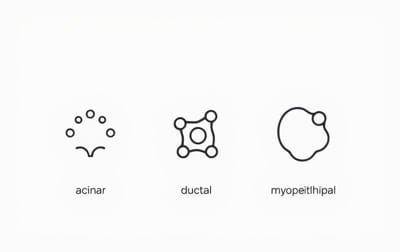
Serous cells are pyramid-shaped with round nuclei located near the base. They are rich in zymogen granules, which are secretory vesicles containing enzymes. These cells are commonly found in the parotid glands, where they form serous acini.
Function
Serous cells secrete a watery fluid that contains enzymes such as amylase, which begins the process of starch digestion in the mouth. This secretion also includes proteins and antimicrobial agents, helping to protect the oral cavity from infections.
The presence of serous cells gives saliva a thin, watery consistency, especially in glands where these cells are dominant.
Mucous Cells Lubricating Secretions
Structure and Characteristics
Mucous cells are columnar and have flattened nuclei at their base. They are filled with mucin granules, which swell and form mucus upon contact with water. These cells are more prominent in sublingual glands and also found in submandibular glands.
Role in Saliva Production
Mucous cells produce mucins, which are glycoproteins that help in lubricating food and protecting the oral tissues. The mucus they produce is thicker and more viscous than serous fluid, providing a smooth coating that facilitates chewing and swallowing.
In glands where mucous cells are predominant, saliva tends to be more viscous and protective in nature.
Myoepithelial Cells Contractile Support Cells
Appearance and Location
Myoepithelial cells are flattened and star-shaped. They lie between the secretory cells and the basement membrane of the acini and ducts. These cells are found throughout all major salivary glands.
Function in Secretion
Although not secretory themselves, myoepithelial cells play an essential supportive and contractile role. When they contract, they help expel the saliva produced by the serous and mucous cells into the ducts. This mechanism aids in the smooth and efficient movement of saliva toward the mouth.
They also provide structural support and may help maintain the integrity of glandular tissue during secretion.
Ductal Cells Transport and Modification
In addition to the acinar cells, salivary glands contain various ductal epithelial cells. These cells line the ducts that carry saliva from the acini to the oral cavity.
Types of Ductal Cells
-
Intercalated duct cells These are small cuboidal cells that connect the acini to larger ducts. They play a minor role in modifying the ionic content of saliva.
-
Striated duct cells These are columnar epithelial cells found in larger ducts. They modify saliva by reabsorbing sodium and secreting potassium and bicarbonate.
-
Excretory duct cells These are found in the largest ducts and serve mainly as passageways for the modified saliva.
Contribution to Saliva Quality
Ductal cells ensure that the final saliva reaching the mouth has the correct pH and electrolyte balance. This makes the fluid suitable for its digestive, lubricating, and protective functions.
Differences Among Gland Types Based on Cell Composition
Each salivary gland has a different ratio of serous and mucous cells, affecting the composition of saliva they produce
-
Parotid glands Composed mainly of serous cells, producing watery, enzyme-rich saliva.
-
Submandibular glands Mixed glands with both serous and mucous cells. Saliva here is both watery and slightly viscous.
-
Sublingual glands Dominated by mucous cells, leading to thicker, mucus-rich saliva.
This variation ensures that different types of saliva are produced depending on the body’s needs at any given time.
The Role of Nerve Signals in Cell Activation
Salivary gland cells respond to stimulation from the autonomic nervous system
-
Parasympathetic stimulation increases the volume of watery saliva, mainly through serous cell activation.
-
Sympathetic stimulation produces small amounts of thick saliva, involving more mucous cell activity.
This coordinated response ensures appropriate saliva production in different situations such as during meals or under stress.
Common Disorders Related to Salivary Gland Cells
Problems in any of the salivary gland cell types can lead to dysfunction. Some examples include
-
Sjögren’s syndrome An autoimmune condition where salivary cells are attacked, leading to dry mouth.
-
Salivary gland tumors These can arise from any of the glandular cells and may require medical intervention.
-
Infections or blockages Affect the secretion pathways and lead to swelling, pain, or reduced saliva flow.
Understanding the cell types helps in diagnosing and treating such conditions effectively.
The salivary glands are composed of a variety of specialized cells, each contributing to the production, modification, and movement of saliva. From enzyme-secreting serous cells to the mucus-producing mucous cells, and the contractile myoepithelial cells, every cell plays an integral role in ensuring proper oral and digestive function.
By learning about these types of cells found in salivary glands, we gain a better appreciation of how our bodies prepare for digestion and maintain oral health through a well-orchestrated biological process.