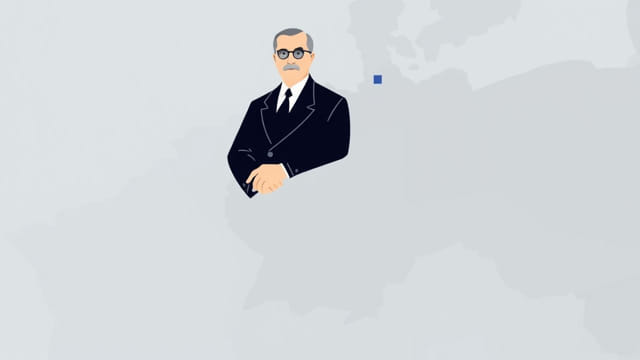
The Yalta Conference of February 1945 played a crucial role in determining the post-war fate of Europe, particularly Germany. Held at a critical moment during World War II, it brought together the leaders of the three major Allied powers Franklin D. Roosevelt of the United States, Winston Churchill of the United Kingdom, and Joseph Stalin of the Soviet Union. One of the main points on their agenda was the division and administration of Germany after the expected defeat of Nazi Germany. The question of who would oversee the various regions of Germany was not merely a matter of geography but a reflection of power dynamics, political strategy, and future alliances. The agreements made at Yalta shaped the landscape of Europe and the Cold War era that followed.
The Division of Germany: Planning at Yalta
At the time of the Yalta Conference, the Allies had already agreed that Germany would be occupied after its surrender. However, the details of how this occupation would be carried out, and who would oversee specific regions, required careful negotiation. The division of Germany into occupation zones was essential to maintaining peace and rebuilding the country in accordance with the Allies’ respective political and economic goals.
Four Occupation Zones
The Allied leaders decided to divide Germany into four occupation zones, each overseen by one of the major Allied powers:
- The United States: Assigned to the southern region of Germany, including areas such as Bavaria and parts of Hesse.
- The United Kingdom: Given control of the northwestern region, including major industrial centers like Hamburg and the Ruhr area.
- The Soviet Union: Took charge of the eastern part of Germany, which later became the foundation of East Germany (the German Democratic Republic).
- France: Although not initially involved in the Yalta Conference, France was later allocated a zone carved out from both the British and American zones.
Each occupying power was responsible for governing its zone, maintaining order, overseeing disarmament, and facilitating the reconstruction process. Importantly, Berlin, the capital city, though located in the Soviet zone, was also divided among the four powers.
Key Figures Who Oversaw the Zones
Though the Yalta Conference featured the heads of state, the actual oversight and administration of each zone were later carried out by military governors and civilian officials appointed by each country. These individuals became central figures in the early post-war history of Germany.
American Oversight: General Dwight D. Eisenhower
General Eisenhower, Supreme Commander of the Allied Expeditionary Force, was the leading figure representing the United States in military matters concerning Germany. After Germany’s surrender, the U.S. established the Office of Military Government for Germany (OMGUS), and Eisenhower initially directed its functions. He was succeeded by General Lucius D. Clay, who played a pivotal role in the reconstruction of West Germany and was instrumental in the implementation of the Marshall Plan.
British Oversight: Field Marshal Bernard Montgomery
The British occupation zone was under the leadership of Field Marshal Bernard Montgomery. As the commander of the British Army of the Rhine, Montgomery was charged with managing British interests and the rebuilding of the northern and industrial parts of Germany. His role was crucial in maintaining order and transitioning from war to peace.
Soviet Oversight: Marshal Georgy Zhukov
Marshal Zhukov, one of the most celebrated Soviet generals of World War II, oversaw the Soviet occupation zone. His administration focused on reshaping the eastern zone along communist lines, including land reforms and the establishment of a Soviet-aligned German administration. This eventually laid the groundwork for the creation of the East German state.
French Oversight: General Jean de Lattre de Tassigny
Though France was not a principal party at Yalta, General Charles de Gaulle ensured that France was recognized as a key Allied power and was given its own occupation zone. General Jean de Lattre de Tassigny represented France in the Allied Control Council and administered the French-controlled areas of southwestern Germany, including parts of Baden and the Rhineland-Palatinate.
The Allied Control Council
To manage Germany as a whole, the Allies established the Allied Control Council, headquartered in Berlin. This body was responsible for implementing decisions jointly across all four zones. It included representatives from each occupying power and was intended to serve as a central authority for Germany’s governance. However, due to mounting political differences, particularly between the Soviet Union and the Western Allies, the council became dysfunctional by 1948, marking a significant step toward the division of Germany into East and West.
Long-Term Impact of Yalta’s Decisions
The decisions made at the Yalta Conference about who would oversee the regions of Germany had profound implications for Europe and the world. The division of Germany laid the foundation for the Cold War. The Western zones, under U.S., British, and French control, gradually formed the Federal Republic of Germany (West Germany) in 1949. Meanwhile, the Soviet-controlled zone became the German Democratic Republic (East Germany), a socialist state aligned with the USSR.
This division not only split Germany physically and ideologically but also turned Berlin into a flashpoint of global tensions. The Berlin Blockade in 1948-1949 and the construction of the Berlin Wall in 1961 were direct consequences of the divisions first outlined at Yalta.
Challenges and Criticisms
While the Yalta Conference is often viewed as a necessary step in post-war planning, it has not been without criticism. Some historians argue that Western leaders conceded too much to Stalin, especially regarding Eastern Europe. The division of Germany, and the political systems imposed in each zone, became sources of resentment and long-standing conflict during the Cold War era. Others point out that the practical challenges of joint governance were underestimated, resulting in the breakdown of Allied cooperation in post-war Germany.
The oversight of the regions of Germany, as agreed upon at the Yalta Conference, was a complex and strategic process. It involved not just the physical division of land but also the administration and political transformation of a country devastated by war. The leaders who participated at Yalta and the military governors who implemented their decisions were instrumental in shaping the course of modern European history. The legacy of Yalta continues to influence discussions about international diplomacy, post-conflict reconstruction, and the long shadow of Cold War politics.