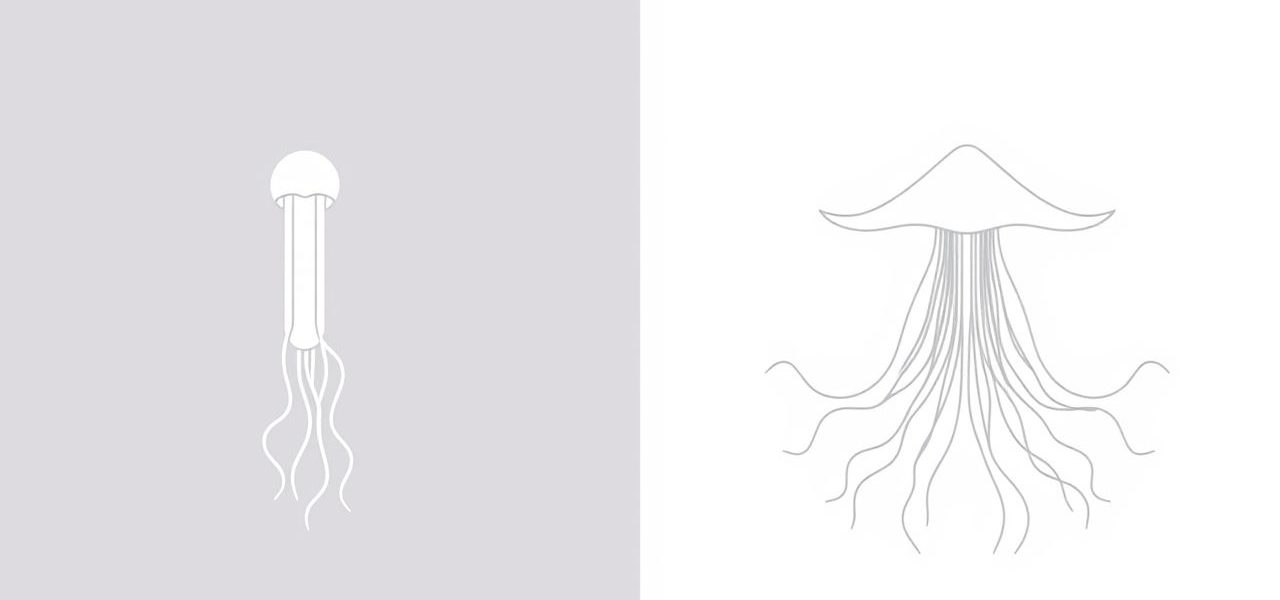
Cnidarians are a fascinating group of simple aquatic animals that include jellyfish, sea anemones, hydras, and corals. They are known for their unique body structures, specialized stinging cells called cnidocytes, and two main body forms: polyp and medusa. Understanding the difference between cnidarian polyp and medusa forms is important for biology students and marine enthusiasts alike, as it reveals how these animals grow, move, and reproduce in their watery environments. Each form serves a different purpose in the life cycle and adapts uniquely to its ecological niche.
Basic Characteristics of Cnidarians
Cnidarians belong to the phylum Cnidaria and are characterized by their radial symmetry, a single opening for both mouth and anus, and the presence of specialized stinging structures used for capturing prey. Most cnidarians exhibit two distinct life forms at some point during their development: the sessile polyp and the free-swimming medusa.
Key Features of Cnidarians
- Radially symmetrical body
- Body made up of two layers: epidermis and gastrodermis
- Gastrovascular cavity for digestion
- Presence of cnidocytes containing nematocysts
- Mostly aquatic, marine organisms
What Is a Polyp?
A polyp is a cylindrical, sessile (non-moving) body form of cnidarians. It usually attaches to a solid surface and has a mouth surrounded by tentacles facing upward. Polyps are common in organisms such as hydras, sea anemones, and corals. They reproduce asexually in most cases, especially in colonial species.
Structure of a Polyp
The polyp form has a tubular body with a base that attaches to a substrate. At the opposite end is the mouth, surrounded by tentacles that are used to capture food. Internally, the body contains a simple gastrovascular cavity used for digestion.
Examples of Polyps
- Hydra
- Sea anemone
- Corals
What Is a Medusa?
The medusa is the free-swimming, umbrella-shaped body form of cnidarians. Unlike polyps, medusae are adapted for movement in the water and usually float with the mouth and tentacles facing downward. Medusa forms are most commonly associated with jellyfish and are typically involved in sexual reproduction.
Structure of a Medusa
A medusa has a bell-shaped body that pulsates to aid movement in water. The tentacles dangle from the edges, while the mouth is located at the center of the underside. Like polyps, medusae also have a gastrovascular cavity, but they are more complex in their movements and behaviors.
Examples of Medusae
- Jellyfish
- Portuguese man o’ war (partially medusa-like)
Polyp vs Medusa: A Comparative View
Differences in Structure
- Polyp: Tube-like, cylindrical body; mouth and tentacles face upward.
- Medusa: Bell or umbrella-shaped body; mouth and tentacles face downward.
Mobility and Lifestyle
- Polyp: Usually sessile, attached to a surface; some can slowly move or bend.
- Medusa: Free-swimming, floating in the water column.
Mode of Reproduction
- Polyp: Mostly asexual reproduction through budding.
- Medusa: Primarily sexual reproduction with gametes.
Function in the Life Cycle
- Polyp: Acts as a juvenile or a colony-forming phase.
- Medusa: Typically represents the adult reproductive stage.
Body Orientation
- Polyp: Mouth and tentacles oriented upward.
- Medusa: Mouth and tentacles oriented downward.
Life Cycle of Cnidarians
Many cnidarians alternate between polyp and medusa stages as part of their life cycle. This process is called ‘alternation of generations’ and helps in dispersal and reproduction. In some species like Obelia, the life cycle includes both stages, while in others like hydras, only the polyp stage is present.
Stages in the Life Cycle
- The polyp reproduces asexually to form medusae through budding.
- The medusae mature and produce gametes (eggs and sperm).
- Fertilization occurs, forming a zygote that develops into a larva (planula).
- The larva settles and grows into a new polyp, continuing the cycle.
This dual strategy of reproduction increases the species’ chances of survival and adaptability in changing environments.
Ecological Roles of Polyps and Medusae
Polyps and medusae play different ecological roles within marine ecosystems. Polyps often form colonies, such as coral reefs, which provide habitat and protection for countless marine species. Medusae, on the other hand, contribute to marine food chains as both predators and prey. Their ability to drift with ocean currents allows them to spread widely and influence marine ecosystems on a larger scale.
Importance of Polyps
- Build coral reefs
- Provide shelter for fish and invertebrates
- Filter plankton and improve water quality
Importance of Medusae
- Serve as food for sea turtles and fish
- Control plankton populations
- Act as bioindicators of ocean health
Adaptations in Polyps and Medusae
Both forms have evolved to suit their environments. Polyps are often equipped with mucus-producing cells for attachment and protection. Their tentacles are adapted for capturing small prey. Medusae, on the other hand, are more dynamic. They have developed rhythmic pulsation mechanisms to swim and advanced sensory structures for navigation in open water.
Sensory Structures in Medusae
- Statocysts for balance
- Light-sensitive ocelli
- Nerve net for coordinated movement
Understanding the differences between cnidarian polyp and medusa forms reveals the adaptability and complexity of these simple organisms. While polyps represent the stationary, often colonial stage of cnidarians, medusae highlight mobility and reproduction. Together, they form a complete life cycle that ensures the survival and ecological success of species within the phylum Cnidaria. Both forms contribute uniquely to marine environments, making cnidarians one of the most important and diverse groups of animals in ocean ecosystems.