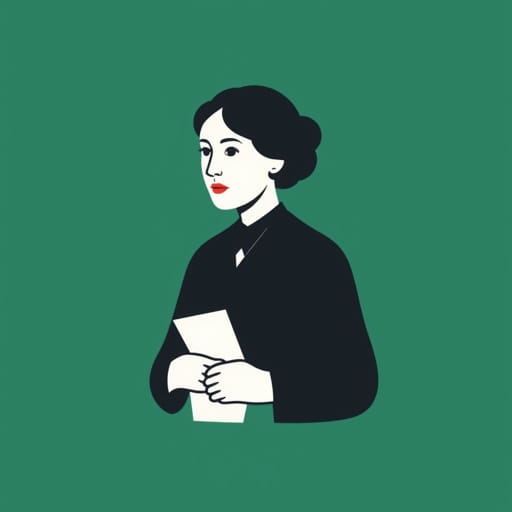
Emmeline Pankhurst is widely recognized as a fearless leader in the British suffragette movement, but long before she stood at the forefront of political rallies and protests, her early life was already shaping her fierce determination and deep commitment to women’s rights. Born into a politically active family, Emmeline’s childhood was filled with conversations about social reform, which greatly influenced her worldview. Understanding her early years offers vital insight into how she became one of history’s most influential figures in the fight for gender equality.
Family Background and Early Influences
Emmeline Pankhurst was born Emmeline Goulden on July 15, 1858, in Moss Side, Manchester, England. She was the daughter of Robert Goulden and Sophia Jane Craine. Her family was firmly rooted in progressive values. Both parents supported social reform, particularly the abolition of slavery and women’s suffrage. Manchester itself was a hub of political thought and industrial growth, making it a vibrant backdrop for a child destined to challenge societal norms.
Her father, Robert, was a successful businessman and an enthusiastic reformer. Her mother, Sophia, was deeply influenced by the women’s suffrage movement. This family environment exposed Emmeline to radical political ideas from an early age. She would often overhear discussions about reform and civil rights, sparking her interest in political activism.
Education and Intellectual Development
Unlike many girls of her era, Emmeline received a relatively advanced education. At the age of 15, she was sent to Ãcole Normale Supérieure in Paris, a school known for its liberal and intellectual atmosphere. Her time in Paris was formative. She was exposed to the philosophies of democracy, liberty, and justice, which fueled her passion for social change.
Though she returned to Manchester after finishing school, the influence of French revolutionary ideals stayed with her. Her Parisian education helped to sharpen her communication skills, critical thinking, and political awareness. These abilities later served her well as she became a public speaker and leader in the suffrage movement.
Meeting Richard Pankhurst
Another major turning point in Emmeline Pankhurst’s early life came when she met Richard Pankhurst, a lawyer and staunch supporter of women’s rights. He was 24 years her senior, but the two shared a common goal: gender equality. Richard had authored the first women’s suffrage bill in England and was deeply involved in promoting legal reforms for women.
They married in 1879 when Emmeline was 21 years old. Their union was not just romantic it was also intellectual and political. Together, they had five children, and Emmeline managed to balance motherhood with her growing involvement in political causes. Richard encouraged her to pursue her activism, giving her the support many women of that era lacked.
Early Activism and Political Awakening
Inspired by her husband’s ideals and motivated by her own experiences, Emmeline began her political work with the Women’s Suffrage Society. However, she soon found the organization’s tactics too passive and ineffective. She yearned for a more assertive approach to advocating women’s rights.
In 1889, she founded the Women’s Franchise League, which fought for the right of married women to vote in local elections. This marked her first step as a leader rather than just a participant. It also signaled the beginning of her divergence from moderate suffrage strategies in favor of more direct action.
Personal Tragedy and Renewed Resolve
Tragedy struck in 1898 when Richard Pankhurst died suddenly. Emmeline was devastated both personally and politically. She had lost not only a life partner but also a fellow activist. Financial difficulties and the challenges of single motherhood added to her burdens. Still, these hardships only strengthened her resolve to fight for justice.
She took a job as a registrar of births and deaths in Manchester. Through her work, she witnessed firsthand the difficult lives of working-class women. Many lived in poverty, subjected to exploitation and domestic violence. These experiences further radicalized her beliefs, leading her to understand that true reform required not only votes for women but broader changes in societal structures.
Foundation of the WSPU
In 1903, Emmeline Pankhurst founded the Women’s Social and Political Union (WSPU), a militant organization that demanded votes for women. Although this event lies beyond her early life, it was the culmination of the experiences, values, and struggles she had faced from childhood through early adulthood. The WSPU would go on to become the most influential women’s suffrage organization in Britain, known for its bold tactics and unyielding leadership under Emmeline’s guidance.
Legacy of Her Early Life
Looking at Emmeline Pankhurst’s early life reveals the foundational experiences that shaped her into a pioneering activist. Her upbringing in a politically engaged household laid the groundwork for her beliefs. Her education in Paris broadened her worldview, and her marriage to Richard Pankhurst provided both inspiration and opportunity. Personal challenges, including the loss of her husband and her encounters with the struggles of ordinary women, further fueled her determination.
Without these early influences, the trajectory of her activism might have been entirely different. The battles she chose to fight and the fierce methods she adopted were rooted in a lifetime of learning, observing, and experiencing the inequalities of the world around her.
Key Themes That Shaped Her Future
- Family influence: A household steeped in progressive values gave Emmeline her political foundation.
- Education: Her schooling in France exposed her to revolutionary ideas and critical thinking.
- Personal partnership: Marriage to Richard Pankhurst solidified her engagement in women’s rights issues.
- Economic struggle: Working among the poor sharpened her awareness of systemic injustice.
- Desire for action: Her frustration with passive movements led her to seek direct, impactful methods.
Emmeline Pankhurst’s early life was more than just a prelude to her activism it was a series of defining experiences that sculpted her identity as a revolutionary leader. By the time she stepped into the spotlight with the founding of the WSPU, she had already endured personal loss, societal obstacles, and the moral weight of inequality. Her roots in political thought, combined with her lived experiences, made her one of the most determined voices in the fight for women’s suffrage. The legacy of Emmeline Pankhurst cannot be fully appreciated without understanding the rich, complex narrative of her early years a story of conviction, courage, and the early sparks of revolution.