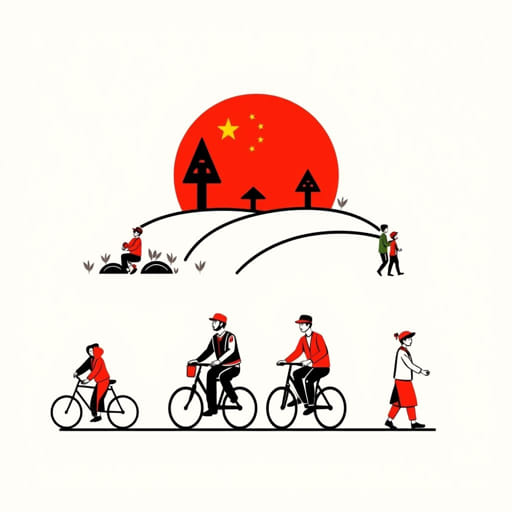
Life in Maoist China, spanning from 1949 to 1976, was shaped profoundly by political ideology, social transformation, and economic campaigns led by the Chinese Communist Party under Chairman Mao Zedong. The everyday experiences of ordinary Chinese citizens were deeply influenced by rapid changes aimed at building a socialist society. While the period was marked by ambitious reforms and social mobilization, it also brought hardships, restrictions, and a restructuring of social life. Exploring everyday life during this era reveals how political movements permeated daily routines, family structures, work, education, and culture across urban and rural China.
Political Environment and Social Control
Ideology in Daily Life
Maoist China emphasized the importance of Communist ideology in all aspects of life. Citizens were expected to participate actively in political campaigns and express loyalty to the Party and Chairman Mao. The study of Mao’s writings, especially the Little Red Book, became a common practice in workplaces, schools, and communities. Political meetings, public self-criticism sessions, and mass rallies were regular features that reinforced collective ideology and discouraged dissent.
Role of the Communist Party
The Communist Party’s influence extended into every corner of society. Neighborhood committees and work units (danwei) organized not only labor but also social activities, healthcare, and welfare distribution. This system tightly controlled personal lives, from employment to housing allocation, making individuals highly dependent on state structures. Informants within communities created an atmosphere of surveillance that kept people aligned with official policies.
Work and Economy
Collectivization and Agricultural Life
For the majority of Chinese citizens living in rural areas, life revolved around collective farming under People’s Communes. Land was confiscated from landlords and merged into collective plots worked by groups of farmers. The Great Leap Forward (19581962), an ambitious campaign to rapidly industrialize and boost agricultural production, drastically altered rural labor.
Farmers were mobilized to work not only on crops but also on large infrastructure projects like irrigation and steel production. However, unrealistic production targets and poor management led to widespread famine, profoundly affecting daily life and survival. Food shortages meant rationing and long hours of hard labor for many.
Urban Labor and the Danwei System
In cities, most people worked in state-owned enterprises or government offices organized under the danwei system. Work units controlled wages, benefits, housing, and social activities. The emphasis was on contributing to socialist construction, often at the cost of personal ambition or economic freedom. Job security was high, but consumer goods and housing were rationed and limited.
Workplaces doubled as community centers, where political education and social functions took place. Individuals had limited mobility and rarely changed jobs, reinforcing stability but also stagnation.
Family and Social Structure
Changes in Family Life
Maoist policies sought to transform traditional family structures. The government promoted gender equality and women’s participation in the workforce, leading to changes in gender roles within households. Marriage laws banned arranged marriages and encouraged free choice, while also emphasizing the importance of family planning.
Despite these reforms, the family remained a fundamental social unit. Extended family ties persisted, especially in rural areas, but the state increasingly intervened in matters such as education and child-rearing. Children were raised with strong socialist values and expected to contribute to collective goals.
Education and Youth
Education was a priority, with a focus on ideological training alongside basic literacy and technical skills. Schools taught Communist principles, and the curriculum was infused with political content. Youth organizations like the Young Pioneers and the Red Guards mobilized students for political campaigns and social control.
During the Cultural Revolution (19661976), formal education was severely disrupted as schools closed and students were sent to the countryside for ‘re-education’ through labor. This upheaval affected a whole generation’s schooling and shaped youth experiences dramatically.
Culture and Daily Life
Restricted Consumer Life
Consumer goods were scarce, and daily life was marked by rationing. Clothing was often simple and uniform-like, with the Mao suit becoming a symbol of egalitarianism. Luxury or Western-style items were rare and frowned upon. Meals were basic, with rice, vegetables, and occasionally meat, depending on availability.
Entertainment and Art
The state controlled cultural production, promoting revolutionary operas, music, and literature that reflected socialist values. Traditional art forms were often reinterpreted to serve political purposes. Access to foreign media was heavily restricted, limiting exposure to non-socialist ideas.
Despite restrictions, people found ways to socialize through community events, festivals, and local performances, maintaining a sense of community amid political pressures.
Health and Living Conditions
Healthcare System
The government expanded access to basic healthcare, especially in rural areas, through barefoot doctors and public health campaigns. Although resources were limited, life expectancy gradually improved during Maoist rule. Vaccination campaigns and efforts to control diseases like malaria and tuberculosis were significant achievements.
Housing and Infrastructure
Housing was allocated through work units, and most people lived in modest apartments or communal housing. Infrastructure development was uneven, with cities having better facilities than rural villages. Sanitation and access to clean water improved slowly, but shortages and overcrowding were common challenges.
Challenges and Hardships
Famine and Political Campaigns
The Great Leap Forward caused one of the deadliest famines in history, profoundly impacting everyday life. Millions faced starvation and displacement. Political campaigns often disrupted social stability, with purges and denunciations creating fear and mistrust among neighbors and families.
Cultural Revolution Impact
The Cultural Revolution further destabilized society, targeting intellectuals, officials, and traditional cultural institutions. Normal routines were upended as political fervor swept the country, forcing people to navigate shifting loyalties and uncertainties. Many experienced persecution, exile, or violence.
Everyday life in Maoist China was a complex mix of ideological enthusiasm, social transformation, and significant hardship. From rural communes to urban factories, from family homes to schools, political ideology penetrated daily existence. While the era witnessed remarkable social campaigns aimed at equality and development, it also brought economic difficulties, political repression, and social upheaval. Understanding this period requires appreciating both the achievements and the challenges that shaped the lives of millions during one of China’s most turbulent and transformative decades.