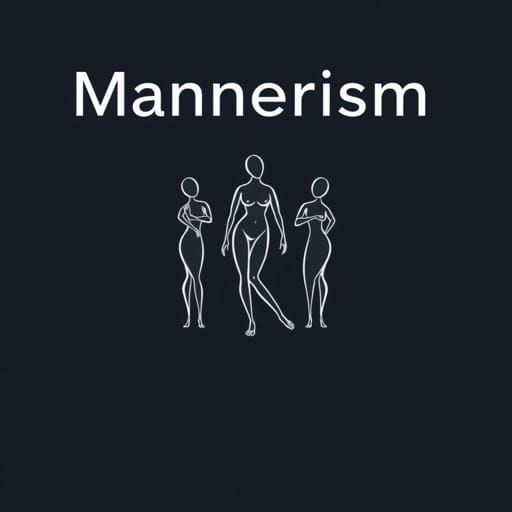
In the rich tapestry of art history, Mannerism stands out as a distinct and often misunderstood movement that emerged in the late Renaissance period. Unlike the harmony and balance that defined the High Renaissance, Mannerism deliberately disrupted classical ideals to explore complexity, tension, and elegance. Artists of this era embraced experimentation, producing works that are striking, unconventional, and deeply expressive. Understanding the core characteristics of Mannerism not only sheds light on its visual style but also provides insight into the cultural shift of the 16th century. This topic explores three major characteristics of Mannerism that define the movement and continue to captivate art historians and viewers alike.
Elongation and Distortion of the Human Figure
Grace Over Realism
One of the most defining characteristics of Mannerist art is the intentional elongation and distortion of the human body. Unlike the naturalism and anatomical precision seen in High Renaissance art, Mannerist artists sought to elevate elegance, grace, and movement even if it meant abandoning realism. Figures are often shown in exaggerated poses with extended limbs, small heads, and highly stylized expressions. This technique was not due to a lack of skill but a conscious artistic choice to move beyond the physical into the theatrical and idealized.
Examples in Painting and Sculpture
Parmigianino’sMadonna with the Long Neckis a textbook example. The Virgin Mary’s body is unusually elongated, and the infant Christ is portrayed with an unsettling stretch that defies anatomical accuracy. Yet, the effect is one of ethereal elegance and divine presence. Similarly, Giambologna’s sculptureThe Rape of the Sabine Womendisplays twisting bodies that spiral upward, ignoring the rigid balance of classical statues in favor of dynamic tension and movement.
Symbolic Implications
These elongated forms often served symbolic or emotional purposes. The distortion helped convey spiritual intensity, sensuality, or psychological depth. It allowed artists to express drama and instability in a time when religious upheaval and political unrest were prevalent across Europe.
Complex Composition and Artificiality
Departing from Balanced Harmony
Mannerist compositions frequently depart from the balanced and symmetrical arrangements typical of earlier Renaissance art. Instead, scenes are crowded, filled with overlapping figures, unnatural spatial relationships, and confusing perspectives. This deliberate complexity adds a sense of tension and unease to the artwork, inviting viewers to look deeper and engage with the piece intellectually as well as emotionally.
Unnatural Poses and Settings
Another hallmark of Mannerist art is the use of contrived, often physically impossible poses. Figures are shown in serpentine twists, elevated gestures, or floating mid-motion, which enhances the overall theatricality of the scene. The settings, too, tend to be architectural backdrops that defy logic columns that stretch too far, staircases that lead nowhere, or spatial perspectives that conflict with each other. These elements do not aim to depict a believable world but rather to impress with technical skill and invention.
Intellectual Appeal
Mannerism is often considered an art form that appeals to the intellect rather than the senses. The complexity of its composition, coupled with artificial elegance, was designed to be appreciated by a cultured audience who could recognize the sophistication and layered meanings within each piece. This was especially true for artworks commissioned by elite patrons seeking to distinguish themselves from common taste.
Emotional Intensity and Ambiguity
Psychological Expression
Where Renaissance art often celebrated clarity, proportion, and serenity, Mannerist works evoke emotion, uncertainty, and complexity. Artists deliberately introduced ambiguity to create deeper emotional responses. Facial expressions are frequently hard to read figures may look serene and troubled at the same time, adding to the emotional charge of the piece. This blend of contradictory emotions reflects the instability of the time, including the aftermath of the Reformation and the rise of religious conflict.
Use of Color and Light
Color in Mannerism also plays a role in heightening emotional tension. Artists often used unnatural, almost acidic color palettes. Vivid pinks, greens, purples, and blues were applied in jarring combinations. This was not meant to imitate real-life lighting or color balance but to create atmosphere and evoke mood. Lighting can be inconsistent or deliberately manipulated to highlight certain features or obscure others, further increasing the sense of mystery and psychological depth.
Religious and Mythological Themes
Mannerist artists frequently used traditional religious or mythological subjects, but reimagined them through their own aesthetic lens. The emotional tone of these artworks could vary widely from mysticism and reverence to eroticism and horror. This diversity reflects the growing disillusionment with rigid narratives and the rise of personal interpretation in art and spirituality. As a result, viewers often feel both fascinated and unsettled by Mannerist works.
Legacy and Influence
Bridging Renaissance and Baroque
Mannerism served as a transitional style between the High Renaissance and the Baroque era. While it did not achieve the universal acclaim of its predecessor or successor during its own time, later critics and historians have come to appreciate its innovations and complexity. The emotional expressiveness, dramatic movement, and tension seen in Mannerism would go on to influence Baroque masters like Caravaggio and Rubens.
Modern Appreciation
Today, Mannerism is appreciated for its bold experimentation and stylistic freedom. Its departure from classical ideals opened doors for future artistic movements that sought to break from tradition. In many ways, Mannerist art reflects a modern sensibility willing to challenge norms, embrace ambiguity, and explore the emotional depths of human experience.
The three key characteristics of Mannerism elongation and distortion of the human form, complex and artificial compositions, and emotional intensity with ambiguity define this unique movement as one of innovation, intellect, and introspection. Far from being a mere extension of the Renaissance, Mannerism carved its own path by rejecting the calm perfection of earlier masters in favor of tension, style, and expressive freedom. In doing so, it left an indelible mark on the history of art and continues to inspire both appreciation and scholarly debate today.