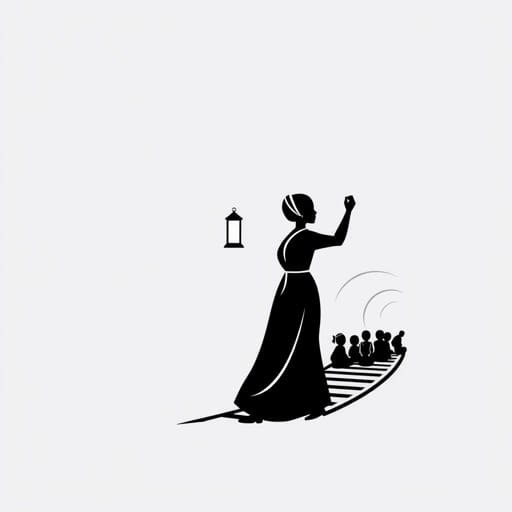
During the darkest period of American slavery, a clandestine network of safe houses and secret routes called the Underground Railroad offered hope and freedom to countless enslaved people. At the heart of this brave operation was Harriet Tubman, a woman of extraordinary courage and unwavering conviction. Born into slavery, Tubman escaped and returned repeatedly to the South to guide others to safety. Her leadership and determination turned her into a central figure of the abolitionist movement. The story of the Underground Railroad and Harriet Tubman is a testament to the human spirit’s enduring quest for liberty and justice.
The Early Life of Harriet Tubman
Harriet Tubman was born Araminta Ross around 1822 in Dorchester County, Maryland. From a young age, she endured the brutal realities of slavery, witnessing violence, separation of families, and inhumane labor. At just twelve years old, she suffered a severe head injury when a weight was thrown at another enslaved person and struck her instead. This injury caused lifelong seizures and visions, which she interpreted as divine messages guiding her path.
In 1849, Tubman made her daring escape to the North, eventually settling in Philadelphia. But her freedom was only the beginning of her story. She couldn’t rest knowing her family and others remained in bondage. Determined to fight for them, she joined the Underground Railroad, a network of abolitionists, freed African Americans, and sympathetic white allies who helped slaves escape to free states and Canada.
The Role of the Underground Railroad
The Underground Railroad was not a physical railway, but rather a series of coordinated routes and safe places used by enslaved people to flee the South. Its success depended on secrecy, code words, and the bravery of those involved. Conductors led fugitives from one station to another, often under the cover of night, risking their lives in the process.
Although it was active before Tubman’s time, she became one of its most iconic and effective conductors. Over the course of a decade, Tubman is believed to have made at least 13 trips back to the South and helped more than 70 enslaved people escape. She never lost a single passenger, earning her the nickname Moses.
How the Underground Railroad Operated
- Safe Houses: Homes or churches that offered food, rest, and shelter to fugitives on the run.
- Conductors: Guides like Tubman who knew the routes and led people to safety.
- Codes and Signals: Messages disguised in songs, quilts, or lanterns indicated safe paths or danger.
- Routes to Canada: After the Fugitive Slave Act of 1850, many freedom seekers headed all the way to Canada to avoid recapture.
Harriet Tubman’s Courage and Strategy
Harriet Tubman was a master strategist. She planned her missions carefully, choosing travel times around winter when nights were longer. She moved by foot, often through swamps and forests, using the North Star as her guide. Tubman also carried a pistol not only for protection against slave catchers but also to discourage escapees from turning back, which could endanger the whole group.
Her familiarity with the land, ability to read nature, and understanding of human psychology made her exceptionally effective. She often dressed in disguise, sang spirituals to signal danger or safety, and collaborated with other abolitionists including William Still and Thomas Garrett.
Impact of the Fugitive Slave Act
In 1850, the U.S. government passed the Fugitive Slave Act, making it legal to capture escaped slaves in free states and return them to bondage. This legislation heightened the danger for Tubman and others on the Underground Railroad. As a result, she rerouted many of her journeys all the way to Canada, where slavery was outlawed and freedom was more secure.
This change further demonstrated Tubman’s adaptability and resolve. She continued her work despite increasing threats, including a bounty placed on her head. Her courage inspired others and helped galvanize the abolitionist cause across the nation.
Harriet Tubman Beyond the Railroad
Tubman’s legacy extends far beyond her work on the Underground Railroad. During the Civil War, she served as a nurse, cook, and eventually as a scout and spy for the Union Army. She was the first woman to lead an armed expedition in the war, during the Combahee River Raid in South Carolina, which resulted in the liberation of over 700 enslaved people.
After the war, Tubman became active in the women’s suffrage movement, working alongside prominent leaders like Susan B. Anthony. She continued to advocate for civil rights and opened the Harriet Tubman Home for the Aged in Auburn, New York, which provided care for elderly African Americans.
Legacy and Recognition
- Harriet Tubman Day: March 10 is recognized in several U.S. states as a day to honor her contributions.
- National Historic Sites: The Harriet Tubman Underground Railroad National Historical Park preserves her legacy in Maryland and New York.
- Proposed Currency Change: Plans have been announced to place Tubman’s image on the U.S. $20 bill as a symbol of freedom and justice.
The story of the Underground Railroad and Harriet Tubman is a shining example of resistance, leadership, and human dignity. Tubman’s bravery in the face of oppression helped shape the course of American history. Her unwavering belief in freedom and her willingness to risk everything for others continue to inspire generations.
Through her actions, Harriet Tubman proved that even one person, armed with determination and guided by justice, can ignite change. The Underground Railroad was more than a route to freedom it was a symbol of hope, and Tubman was its beating heart. Remembering her today ensures that the courage and resilience of those who fought against slavery will never be forgotten.