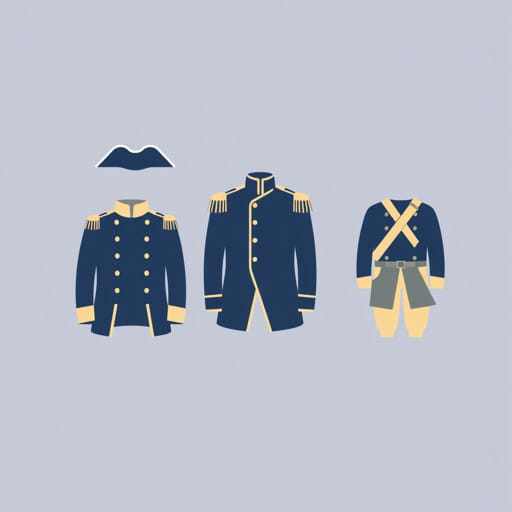
The Revolutionary War was not only a clash of ideologies and military strategies, but also a defining moment in the visual identity of armies through their uniforms. Uniforms of the Revolutionary War varied widely based on allegiance, region, supply chains, and the evolution of military structure during the conflict. These garments were not simply about appearance they served as symbols of loyalty, rank, and practicality on the battlefield. Understanding the diversity and significance of Revolutionary War uniforms offers a fascinating insight into the daily lives and struggles of both American and British soldiers, as well as their allies.
American Continental Army Uniforms
The Birth of a Military Identity
When the American Revolutionary War began in 1775, the Continental Army had no official uniform. Militias wore whatever clothing was available, often hunting shirts and breeches. These practical garments were comfortable and provided a sense of unity among soldiers. However, as the war progressed, a need for standardized military uniforms became more apparent.
Standardization Under George Washington
General George Washington recognized the importance of a uniform dress code to build discipline and esprit de corps. In 1779, the Continental Army adopted a more regulated uniform system. The main uniform featured dark blue coats with colored facings that indicated the region:
- New England troops: white facings
- Mid-Atlantic troops: red facings
- Southern troops: blue facings
Soldiers typically wore white or off-white breeches or trousers, a waistcoat, and a tricorne or cocked hat. The color blue became a symbolic choice, representing the American cause in contrast to the red coats of the British Army.
Hunting Shirts and Militia Wear
Even after the introduction of standardized uniforms, many soldiers continued wearing fringed hunting shirts, especially in the southern and frontier militias. These garments were lightweight, cheap to produce, and suited to guerrilla warfare in wooded terrain. Often dyed in shades of brown or green, hunting shirts allowed soldiers to blend into their environment more effectively.
British Army Uniforms
The Iconic Redcoats
The British soldiers were famously known as ‘Redcoats’ due to their bright scarlet uniforms. These coats were often accompanied by white breeches, black gaiters, and black tricorn hats. The red dye used for the coats was a vibrant cochineal-based color, designed to create a bold and intimidating presence on the battlefield.
The British Army was more standardized and better equipped than its American counterpart. However, despite their uniformity, regimental facings varied in color. For example:
- Royal regiments: dark blue facings
- English line regiments: white facings
- Scottish regiments: yellow or green facings
These color differences allowed commanders to distinguish between units and enhanced regimental pride among troops.
Adaptations in the Field
Despite their formality, British uniforms were not always suited for the American terrain and climate. Soldiers often modified their dress in the field, removing coats during the summer or adding makeshift gear during winter campaigns. In the Southern campaigns, British troops sometimes wore shorter jackets and lighter clothing to better cope with heat and humidity.
Uniforms of Loyalists and Other Allies
Loyalist Forces
Loyalist troops colonists who remained loyal to the British Crown wore uniforms that closely resembled British Army attire. Some units had green coats with red facings, which helped differentiate them from regular British regiments while still maintaining allegiance through color symbolism. The green coats also offered better camouflage in wooded areas.
Hessian Mercenaries
Germany’s Hessian soldiers, who fought on behalf of the British, brought their own distinctive uniforms. These troops wore blue coats with red facings, tall brass-fronted mitre caps or tricorns, and heavy woolen breeches. Their disciplined appearance and formidable combat skills made them one of the most recognizable forces in the British ranks.
French and Spanish Allies
France’s entry into the war in 1778 brought French troops clad in white coats with colorful facings. The French uniform was more elaborate than the American version and included ornate lapels, sashes, and cockades. Spanish soldiers, who joined the conflict later, wore blue or white uniforms depending on their region of deployment.
Rank Distinctions and Insignia
Officers and Their Attire
Uniforms in the Revolutionary War also indicated rank and social class. Officers on both sides wore more decorative attire with gold or silver epaulettes, sashes, and fine embroidery. American officers, especially in the Continental Army, had to purchase their own uniforms, leading to great variation in quality and design.
Badges and Accessories
To distinguish ranks, especially in the Continental Army, colored sashes were introduced:
- Red sashes: generals
- Blue sashes: colonels
- Green or yellow cockades: different units or allegiances
Additionally, soldiers wore cartridge boxes, bayonet belts, and other leather accoutrements that were often hand-crafted locally due to shortages in supplies.
Challenges in Supply and Production
Shortages and Improvisation
The American war effort was hampered by chronic shortages of fabric, buttons, dyes, and skilled tailors. Many uniforms were sewn by hand by local women or small workshops. Soldiers frequently repaired or reused worn garments. Supplies from France and other allies helped alleviate some of these issues, but consistency remained a challenge throughout the war.
Role of Women and Local Producers
Women played a critical role in producing and maintaining Revolutionary War uniforms. Spinning, dyeing, and sewing became patriotic duties on the home front. Local communities formed support networks to outfit militias and support the Continental Army with uniforms and blankets during harsh winters.
Legacy of Revolutionary War Uniforms
Symbolism and National Identity
The uniforms of the Revolutionary War became powerful symbols of the ideologies and identities at stake. The blue of the Continental Army remains a central color in American military traditions today. The redcoats became a lasting symbol of British colonial power, while the hunting shirt came to represent the rugged American frontiersman spirit.
Modern Reenactments and Museums
Today, Revolutionary War uniforms are preserved in museums and brought to life through historical reenactments. These efforts provide educational insights and honor the memory of those who served. Enthusiasts and historians pay close attention to fabric type, stitching patterns, and accessories to recreate uniforms as accurately as possible.
The uniforms of the Revolutionary War were far more than military garments. They were reflections of loyalty, resourcefulness, regional identity, and social order. From the improvised attire of early militias to the distinguished coats of officers and foreign allies, these uniforms tell the complex and human story of a revolution. Through their diversity and symbolism, they helped shape the emerging American identity and remain an essential aspect of Revolutionary War history.