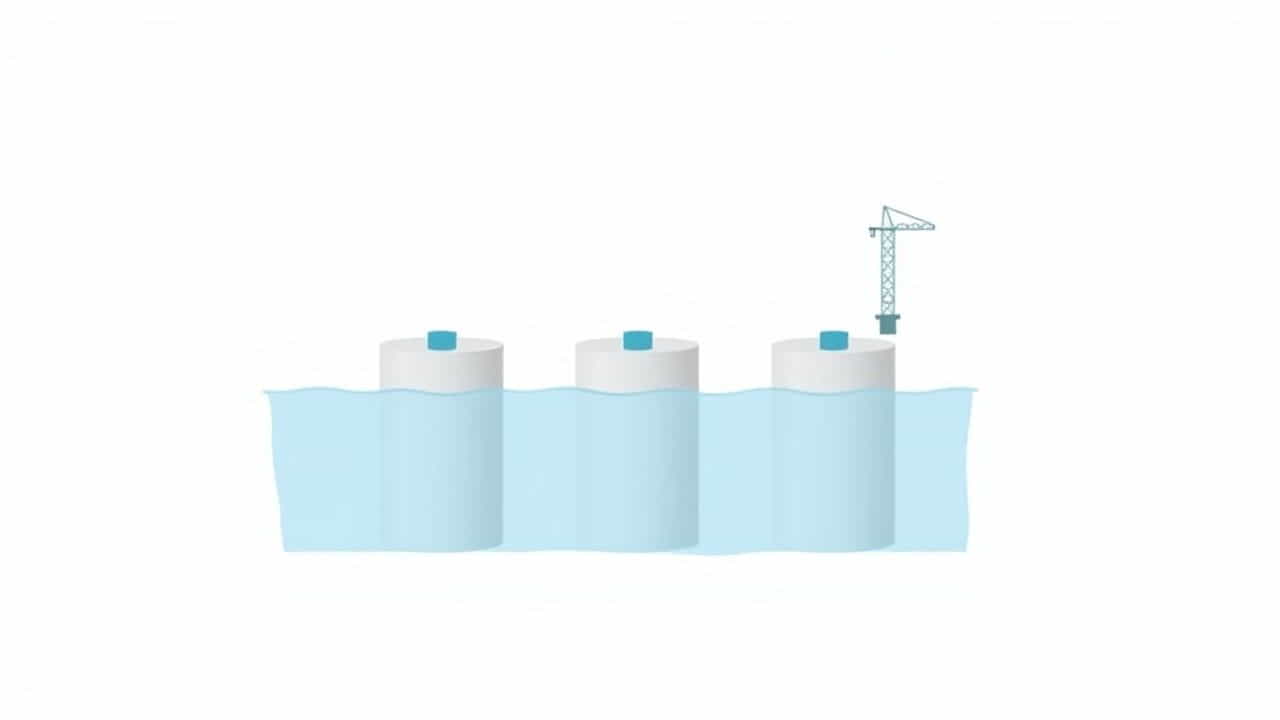
A caisson wall is a type of deep foundation structure used for retaining walls, bridge piers, and underwater construction. This type of wall is built using large, watertight caissons that are either drilled or sunk into the ground to provide stability and support in challenging soil conditions.
This guide will explain what a caisson wall is, how it works, its advantages, types, construction process, and maintenance tips.
What is a Caisson Wall?
A caisson wall is a structural wall system created by installing a series of caissons (large concrete or steel cylinders) into the ground. These caissons are filled with reinforced concrete and sometimes connected with a continuous retaining wall to provide additional support.
Caisson walls are commonly used in marine structures, deep excavations, and high-load infrastructure projects where conventional foundations are not feasible.
Key Features of a Caisson Wall
-
Deep foundation system that provides high structural stability.
-
Used in soft soils, waterlogged areas, and deep excavations.
-
Constructed using precast or cast-in-place concrete caissons.
-
Can withstand heavy loads, lateral pressure, and water forces.
Advantages of Caisson Walls
1. Strong and Durable
Caisson walls are designed to handle extreme loads, making them ideal for high-rise buildings, bridges, and coastal structures.
2. Suitable for Deep Excavations
Unlike traditional retaining walls, caisson walls can be built in deep excavation sites, providing better soil and water retention.
3. Resistant to Water and Erosion
Caisson walls are often used in marine environments due to their water resistance and ability to prevent soil erosion.
4. Minimal Ground Disturbance
Since caisson walls are installed deep into the ground, they cause less soil movement and reduce the risk of structural settlement.
5. Versatile Applications
They can be used in highways, tunnels, underground parking, ports, and foundation support for tall buildings.
Types of Caisson Walls
1. Drilled Caisson Wall
-
Constructed by drilling deep cylindrical holes into the ground.
-
Reinforced with steel and filled with concrete.
-
Used in unstable soil conditions and deep excavations.
2. Open Caisson Wall
-
Built using precast caisson rings that are sunk into place.
-
Suitable for underwater construction and bridge foundations.
-
Requires heavy equipment for sinking and alignment.
3. Pneumatic Caisson Wall
-
Designed for water-saturated soil conditions.
-
Workers operate in pressurized chambers to remove water and soil.
-
Used in harbor construction, deep foundations, and tunnels.
4. Box Caisson Wall
-
Large precast concrete boxes placed in position and filled with concrete.
-
Used for dock walls, marine piers, and underwater structures.
-
Provides high stability and resistance to lateral forces.
Applications of Caisson Walls
1. Bridge Piers and Supports
Caisson walls are essential in bridge construction as they provide deep foundation support in rivers and unstable ground conditions.
2. Marine and Coastal Structures
Used in ports, docks, seawalls, and offshore platforms, caisson walls protect against wave action and soil erosion.
3. Underground Structures
Ideal for tunnels, basements, and underground parking where deep excavation and soil retention are necessary.
4. Retaining Walls for Highways and Railways
Helps to stabilize slopes and prevent landslides in road and railway construction.
5. High-Rise Building Foundations
Provides strong and stable foundations for skyscrapers and heavy-load structures.
Construction Process of a Caisson Wall
1. Site Preparation
-
Conduct a geotechnical survey to analyze soil conditions.
-
Clear debris and prepare the excavation area.
-
Determine the type and depth of caissons needed.
2. Drilling or Excavation
-
Use rotary drilling rigs or excavation equipment to create holes for the caissons.
-
Ensure proper depth and diameter according to engineering requirements.
3. Caisson Installation
-
Place precast caissons or pour concrete into drilled holes.
-
Use steel reinforcement bars for added strength.
-
For underwater applications, pressurized caissons may be used.
4. Grouting and Sealing
-
Fill gaps between caissons with grout or sealant to prevent soil movement.
-
Ensure waterproofing for marine or underground structures.
5. Backfilling and Compaction
-
Backfill the surrounding area with compacted soil or concrete.
-
Check for stability and load-bearing capacity.
6. Final Inspection and Testing
-
Conduct load tests and structural inspections.
-
Ensure compliance with safety regulations and engineering standards.
Maintenance of Caisson Walls
1. Regular Inspections
Check for cracks, leaks, or settlement issues to prevent structural failures.
2. Waterproofing Maintenance
Apply sealants or coatings to prevent water infiltration and corrosion.
3. Soil Stability Monitoring
Ensure surrounding soil remains stable and does not cause shifting or tilting.
4. Structural Reinforcement
If cracks or damage appear, apply reinforcement techniques like grouting or additional bracing.
5. Corrosion Protection
For steel-reinforced caissons, apply anti-corrosion treatments to extend their lifespan.
Challenges in Caisson Wall Construction
1. High Construction Costs
-
Problem: Requires heavy equipment and skilled labor.
-
Solution: Use precast caissons to reduce costs and time.
2. Difficult Soil Conditions
-
Problem: Soft or waterlogged soil can cause instability.
-
Solution: Use pneumatic caissons to handle difficult conditions.
3. Water Pressure and Leakage
-
Problem: Underwater structures face high water pressure.
-
Solution: Use sealing and grouting techniques to prevent leaks.
4. Heavy Equipment Requirements
-
Problem: Large machinery is needed for installation.
-
Solution: Plan logistics and use modular caisson sections.
Comparison: Caisson Wall vs. Other Retaining Walls
| Feature | Caisson Wall | Sheet Pile Wall | Gravity Retaining Wall |
|---|---|---|---|
| Depth | Very deep | Shallow to medium | Shallow |
| Load Capacity | High | Moderate | Low |
| Installation | Requires drilling/excavation | Driven into ground | Stacked with concrete blocks |
| Soil Stability | Very stable | Moderate | Less stable |
| Best For | Bridges, deep excavations, marine structures | Temporary walls, small retaining structures | Low-rise buildings, garden walls |
A caisson wall is a strong, durable, and versatile deep foundation structure used for bridge piers, marine construction, retaining walls, and underground structures. Its ability to withstand heavy loads, resist water pressure, and support deep excavations makes it a crucial element in modern engineering projects.
By following proper design, construction, and maintenance practices, caisson walls can provide long-lasting and reliable structural support for various infrastructure developments.