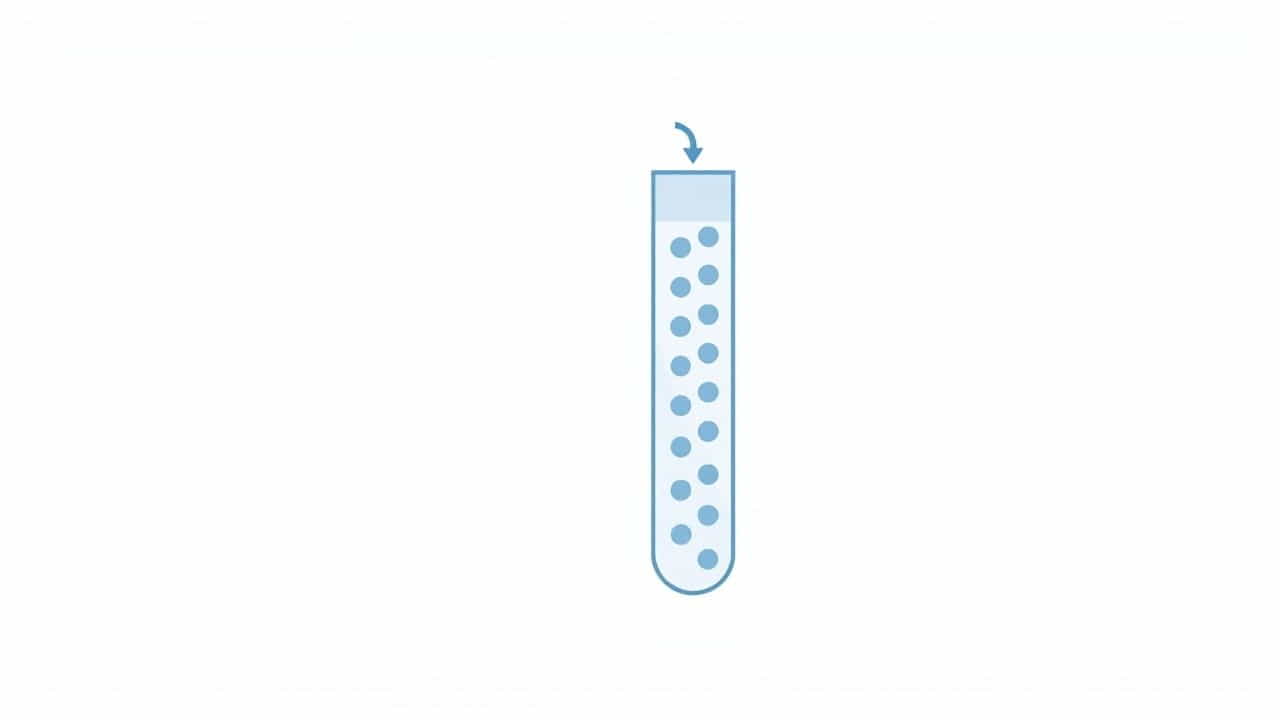
Gel Permeation Chromatography (GPC) is a powerful analytical technique used for separating and analyzing polymers based on their molecular size. It is a type of size exclusion chromatography (SEC) widely used in research, pharmaceuticals, and material sciences. GPC plays a crucial role in determining the molecular weight distribution of polymers, which affects their properties and applications.
This topic explores the principles, working mechanism, applications, advantages, and limitations of Gel Permeation Chromatography.
1. What Is Gel Permeation Chromatography?
Gel Permeation Chromatography (GPC) is a liquid chromatography technique that separates molecules based on their hydrodynamic volume (size in solution). It is mainly used for polymer analysis to determine molecular weight and distribution.
GPC works on the principle that smaller molecules penetrate deeper into the pores of a stationary phase, while larger molecules pass through more quickly, leading to size-based separation.
Key Features of GPC
-
Used for polymer and protein analysis
-
Separates molecules based on size, not charge or polarity
-
Non-destructive and requires minimal sample preparation
-
Commonly performed using organic solvents or aqueous solutions
2. Principle of Gel Permeation Chromatography
GPC relies on size exclusion rather than adsorption. The stationary phase consists of porous beads, which allow small molecules to enter the pores while larger molecules remain in the mobile phase.
How GPC Works
-
The sample is dissolved in a solvent and injected into the chromatography system.
-
It travels through a column filled with porous beads (stationary phase).
-
Larger molecules bypass the pores and elute first, while smaller molecules enter the pores and take longer to pass through.
-
A detector measures the elution time, which correlates with molecular size.
Factors Affecting Separation in GPC
-
Pore size of the stationary phase
-
Molecular size of the sample
-
Flow rate of the mobile phase
-
Solvent used for elution
3. Components of a Gel Permeation Chromatography System
A standard GPC system includes the following components:
a. Mobile Phase
-
The solvent that carries the sample through the column.
-
Common solvents include tetrahydrofuran (THF), water, dimethylformamide (DMF), and chloroform.
-
The choice of solvent depends on the solubility of the sample.
b. Stationary Phase (Column Packing Material)
-
Made of porous polymeric beads (e.g., polystyrene or silica-based materials).
-
Pore size is carefully selected to match the molecular weight range of the sample.
c. Chromatographic Column
-
The column is filled with the stationary phase.
-
Varies in length (typically 30 cm or more) and diameter (4-8 mm) depending on application needs.
d. Pump System
-
Delivers a consistent flow of mobile phase through the column.
-
Ensures uniform separation and reproducibility of results.
e. Sample Injector
-
Introduces the dissolved sample into the mobile phase stream.
-
Usually an auto-injector or manual loop injector.
f. Detector
-
Detects and records the separated molecules.
-
Common detectors include:
-
Refractive Index (RI) Detector – Measures changes in refractive index (most common in GPC).
-
UV-Vis Detector – Detects compounds that absorb ultraviolet light.
-
Light Scattering Detector – Used for absolute molecular weight determination.
-
g. Data Processing System
-
Converts detector signals into molecular weight distribution graphs.
-
Provides numerical values such as Mn (number-average molecular weight) and Mw (weight-average molecular weight).
4. Applications of Gel Permeation Chromatography
GPC is widely used in various fields due to its ability to analyze molecular weight distribution.
a. Polymer Analysis
-
Determines molecular weight and polydispersity index.
-
Used in the production of plastics, rubbers, and synthetic fibers.
b. Pharmaceutical Industry
-
Analyzes biopolymers, proteins, and drug formulations.
-
Quality control of polymer-based drug delivery systems.
c. Food and Beverage Industry
-
Evaluates carbohydrate and polysaccharide structures in food products.
-
Determines starch degradation and gelatin properties.
d. Environmental Science
-
Analyzes natural organic matter (NOM) in water treatment.
-
Used in wastewater treatment studies.
e. Biomedical Research
-
Studies protein aggregation and degradation.
-
Used in gene therapy research for analyzing viral vectors.
5. Advantages of Gel Permeation Chromatography
GPC is a preferred method for polymer analysis due to its several advantages:
-
Fast and efficient – Separation occurs in a short time.
-
Non-destructive – Does not alter the sample’s chemical structure.
-
Highly reproducible – Provides consistent results with proper calibration.
-
Versatile – Applicable to a wide range of synthetic and natural polymers.
6. Limitations of Gel Permeation Chromatography
Despite its benefits, GPC has some limitations:
-
Limited molecular weight range – Requires selection of appropriate column pore size.
-
Requires calibration – Needs standard samples for accurate molecular weight determination.
-
Solvent compatibility – Some polymers require specific solvents for dissolution.
-
High cost – GPC instruments and columns can be expensive.
7. Comparison of Gel Permeation Chromatography and Other Chromatographic Techniques
| Feature | Gel Permeation Chromatography | High-Performance Liquid Chromatography (HPLC) | Gas Chromatography (GC) |
|---|---|---|---|
| Separation Principle | Size exclusion | Adsorption or partition | Volatility |
| Analyzed Samples | Polymers, proteins | Small molecules, drugs | Volatile compounds |
| Mobile Phase | Liquid solvent | Liquid solvent | Gas (e.g., helium) |
| Detector Used | RI, UV-Vis, Light Scattering | UV-Vis, Fluorescence | Flame Ionization, Mass Spectrometry |
| Common Application | Polymer molecular weight analysis | Drug and chemical analysis | Analysis of gases and volatile liquids |
8. Future Trends in Gel Permeation Chromatography
With technological advancements, GPC continues to evolve:
-
Use of multi-detector systems – Combining light scattering and viscometry for accurate molecular characterization.
-
Development of new stationary phases – Expanding separation range and improving resolution.
-
Automation and AI integration – Faster analysis and improved data interpretation.
-
Green solvents and eco-friendly approaches – Reducing environmental impact.
Gel Permeation Chromatography is a valuable tool in polymer science, pharmaceuticals, and material research. By separating molecules based on size, it provides critical insights into molecular weight distribution and structural properties. With its growing applications and technological advancements, GPC remains a cornerstone of modern analytical chemistry.