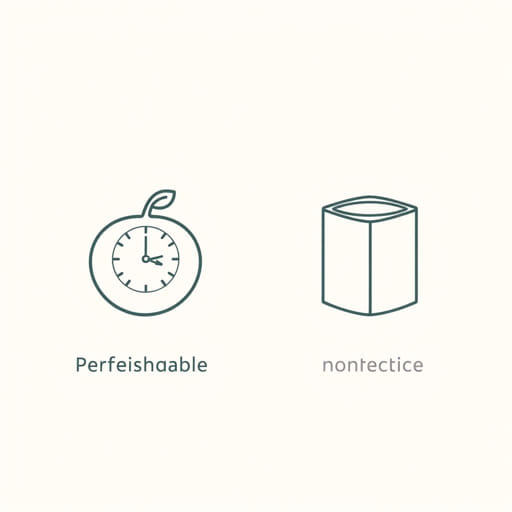
In everyday life, especially when shopping for groceries or organizing a pantry, understanding the difference between perishable and nonperishable food is essential. These categories determine how food should be stored, how long it remains safe to eat, and how it fits into daily meal planning. Knowing whether a food item is perishable or nonperishable helps prevent spoilage, reduces food waste, and can even save money. Both types play important roles in the kitchen, emergency preparedness, and global food supply systems.
Definition of Perishable Food
What Makes Food Perishable?
Perishable foods are those that spoil, decay, or become unsafe to eat if not stored properly. These items typically require refrigeration or freezing to extend their shelf life. Their composition includes moisture, fat, or proteins that make them more susceptible to bacterial growth and chemical changes.
Examples of Perishable Foods
- Meat and poultry (raw or cooked)
- Seafood
- Dairy products like milk, cheese, and yogurt
- Eggs
- Fresh fruits and vegetables (especially leafy greens, berries, and mushrooms)
- Prepared foods such as salads, soups, and leftovers
These items must be stored at temperatures below 40°F (4°C) to prevent bacterial growth. In hot climates or during warm seasons, perishable foods can spoil in just a few hours if left at room temperature.
Definition of Nonperishable Food
What Are Nonperishables?
Nonperishable foods are items that can be stored at room temperature for a long time without spoiling. They typically have low moisture content and are either preserved through drying, canning, freezing, or chemical preservation. These items are ideal for long-term storage, emergency kits, or travel because they don’t require refrigeration.
Examples of Nonperishable Foods
- Canned goods (beans, vegetables, meats, soups)
- Dried foods (rice, pasta, lentils, oats)
- Baking ingredients (flour, sugar, salt)
- Spices and herbs
- Powdered milk or non-dairy creamers
- Peanut butter and nut butters
- Crackers and packaged snacks
Nonperishables are often packaged in vacuum-sealed bags, cans, jars, or other containers that protect them from air and moisture. They can last from months to even years when stored in a cool, dry place.
Key Differences Between Perishable and Nonperishable Foods
1. Shelf Life
The most obvious difference lies in how long each type can be safely stored.
- Perishable foodshave a short shelf life ranging from a few days to a couple of weeks unless frozen.
- Nonperishable foodscan last several months or even years without spoiling.
2. Storage Requirements
Proper storage methods are crucial to prevent spoilage.
- Perishablesmust be refrigerated or frozen to remain safe and fresh.
- Nonperishablesare usually stored in pantries, cabinets, or shelves at room temperature.
3. Food Safety and Spoilage
The risk of bacterial contamination is greater in perishable foods.
- Perishable itemscan become hazardous if left unrefrigerated for too long due to rapid bacterial growth.
- Nonperishable itemsare less likely to cause foodborne illnesses when properly stored, though they can still degrade in quality over time.
4. Packaging
Packaging methods vary depending on the nature of the food.
- Perishable productsare usually packaged in breathable, refrigerated containers or vacuum-sealed for short-term preservation.
- Nonperishable itemsare sealed tightly in metal cans, glass jars, plastic packaging, or foil-lined bags to keep out air, moisture, and pests.
5. Usage and Planning
How you plan meals or stock your pantry will depend on the food type.
- Perishablesrequire frequent shopping and timely consumption before expiration.
- Nonperishablesare perfect for bulk buying and storing for emergencies, road trips, or extended periods.
Why the Distinction Matters
Meal Planning and Shopping
Understanding the difference helps with meal planning and shopping efficiency. Fresh items should be used quickly, while pantry staples can be stocked in advance. This balance helps create diverse and flexible meals throughout the week.
Food Waste Reduction
Perishable foods often account for the bulk of household food waste due to their short shelf life. Being aware of their nature encourages consumers to shop more consciously, store properly, and use them before spoilage occurs.
Emergency Preparedness
Nonperishable foods play a vital role in emergency situations such as natural disasters or power outages. They are reliable sources of nourishment when refrigeration and cooking appliances are unavailable.
Economic Considerations
Since nonperishable foods can be bought in bulk and stored for a long time, they are cost-effective and reduce the need for frequent grocery trips. Perishable foods, while often fresher and more nutritious, require more careful budgeting and planning.
Tips for Managing Perishable and Nonperishable Foods
Organizing Your Pantry and Fridge
- Label foods with purchase or expiration dates to monitor freshness.
- Use a first in, first out system consume older items before new ones.
- Keep perishables at proper temperatures (below 40°F for refrigeration).
- Store nonperishables in cool, dry areas to avoid moisture damage.
Cooking with a Mix of Both
Combining perishable and nonperishable ingredients can result in flavorful, balanced meals. For example, use canned beans with fresh tomatoes, or dried pasta with sautéed vegetables. This strategy stretches fresh ingredients while relying on pantry staples for bulk.
Preserving Perishables
Extending the life of perishable foods can be done through techniques such as:
- Freezing meats, fruits, and leftovers
- Pickling vegetables
- Fermenting dairy or produce (e.g., yogurt, kimchi)
- Drying or dehydrating fruits and herbs
The difference between perishable and nonperishable food lies in how long the item can safely last without refrigeration and how it must be stored. Perishable foods are fresh, nutritious, and require prompt consumption or cold storage. Nonperishable foods are long-lasting, convenient, and vital for emergencies or everyday cooking. Knowing how to balance and manage both types ensures healthier meals, smarter budgeting, reduced waste, and better preparedness. Whether stocking a pantry or preparing dinner, recognizing the unique roles of each food type can greatly enhance your overall food strategy and kitchen efficiency.