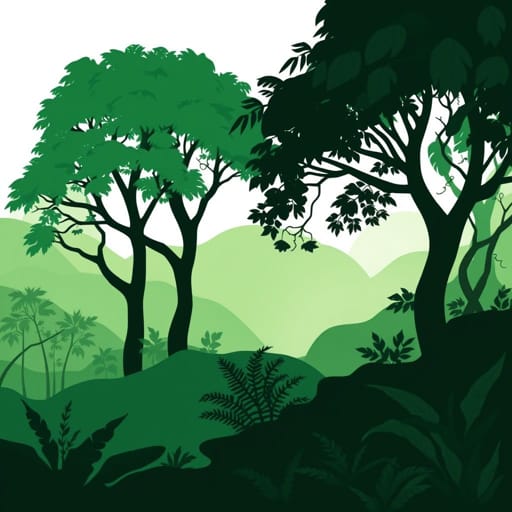
Understanding the Climate of the Carboniferous Period A Journey Through Ancient EarthThe Carboniferous Period, which lasted from about 359 to 299 million years ago, is one of the most fascinating chapters in Earth’s history. This era is known for its vast swampy forests, the rise of giant insects, and the formation of much of the world’s coal reserves. But what was the climate like during this period? How did it influence life and the environment?
To answer that, we need to take a closer look at the global climate patterns, atmospheric composition, and the shifting geography of the Carboniferous world.
A Warm and Humid Beginning
During the early Carboniferous, the Earth experienced a warm and humid climate. The average global temperature was relatively high, and tropical conditions dominated the equatorial regions. Large parts of the continents were covered with shallow seas and dense tropical rainforests.
These conditions supported lush vegetation, especially massive tree-like plants such as lycopods, ferns, and horsetails. The warm and wet climate allowed these plants to grow in thick, swampy forests, which eventually turned into coal over millions of years hence the name "Carboniferous."
Oxygen Levels and Their Effects
One of the most striking features of the Carboniferous atmosphere was its high oxygen content. Oxygen levels reached up to 35%, compared to today’s 21%. This was largely due to the rapid growth of vegetation and the burial of organic material, which reduced carbon dioxide in the atmosphere and increased oxygen.
This oxygen-rich environment had a significant impact on life, particularly on insects and amphibians. Creatures such as dragonflies with wingspans over two feet and giant millipede-like arthropods thrived in this atmosphere, which supported their large body sizes and active lifestyles.
The Role of Plate Tectonics and Geography
The arrangement of continents during the Carboniferous was different from today. The supercontinent Pangaea was beginning to form, bringing together landmasses and creating extensive inland areas. As these continents collided, they created vast mountain ranges, which influenced wind patterns and climate zones.
Near the equator, where dense forests grew, the climate remained warm and moist. In contrast, the interiors of the growing landmasses began to experience more seasonal and drier conditions over time.
A Shift Toward Glaciation
As the Carboniferous period progressed into the late stages, the global climate began to cool. This shift marked the beginning of one of Earth’s major ice ages, particularly in the southern supercontinent Gondwana (which included present-day South America, Africa, Antarctica, Australia, and India).
Glaciers spread across these regions, and evidence of glaciation can still be seen today in the form of striated rocks and glacial deposits. The cooling was likely caused by a combination of reduced carbon dioxide levels, changes in ocean currents, and the growing influence of landmasses at the South Pole.
Seasonal Changes and Climate Variability
The later Carboniferous was not uniformly cold, but rather marked by significant climate variability. Some regions experienced strong seasonal changes, with alternating wet and dry periods. This variability affected plant life and animal adaptation.
Forests that once covered much of the land began to shrink, and new plant species adapted to drier conditions started to emerge. Amphibians, which depended on moist environments, declined in diversity, while early reptiles began to rise, better suited to drier, more variable climates.
Impact on Coal Formation
The climate of the Carboniferous played a critical role in the formation of coal beds. During the warm and wet phase, dead plant material accumulated in swampy environments, forming thick layers of peat. As these layers were buried and compressed over time, they turned into coal.
These coal deposits are found today in places like North America, Europe, and Asia, and they remain vital resources. The climate-driven growth and decay of ancient forests essentially laid the foundation for the coal industry that powered the Industrial Revolution.
Conclusion A Climate That Shaped Life and Landscapes
The Carboniferous climate was dynamic and transformative. From humid tropical rainforests to glaciated southern continents, the period witnessed dramatic changes that influenced evolution, biodiversity, and the Earth’s geology.
Understanding this ancient climate helps scientists learn more about Earth’s natural cycles, the effects of atmospheric composition, and the deep connection between climate and life. Though it was a world very different from our own, the lessons from the Carboniferous Period continue to inform how we understand climate change today.