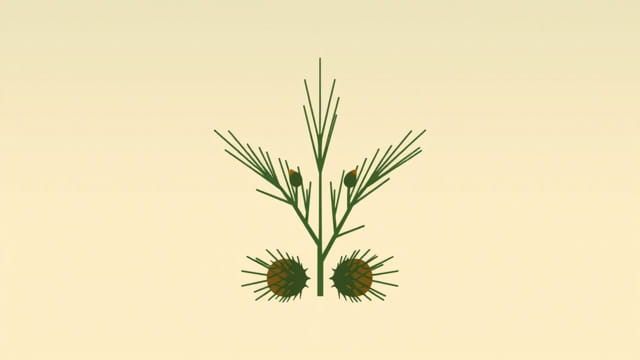
Which Are the Nonflowering Seed Plants That Dominated the Paleozoic?The Paleozoic Era, which spanned from around 541 to 252 million years ago, marked a critical time in the evolution of life on Earth. One of its most fascinating features was the rise of early land plants. Among these, nonflowering seed plants also known as gymnosperms played a major role. These ancient plants laid the foundation for modern terrestrial ecosystems long before flowering plants evolved.
This topic explores the major types of nonflowering seed plants that dominated the Paleozoic Era, their characteristics, and their ecological significance.
Understanding Nonflowering Seed Plants
Nonflowering seed plants are vascular plants that reproduce using seeds but do not produce flowers or fruits. The seeds are typically exposed or "naked," not enclosed in a protective fruit. These plants were crucial during the Paleozoic because they were among the first to colonize dry land effectively.
The dominant nonflowering seed plants during this era belonged to a group known as gymnosperms, which includes several extinct and living lineages.
Key Characteristics of Paleozoic Gymnosperms
Gymnosperms that thrived during the Paleozoic shared some common features
-
They had vascular tissues, allowing them to transport water and nutrients efficiently.
-
Their seeds developed on the surface of reproductive structures, not inside fruits.
-
They could survive in drier environments compared to spore-producing plants like ferns and mosses.
-
They often had woody stems and well-developed root systems, making them better suited for land environments.
These features gave them an evolutionary advantage as the Earth’s climate and landforms changed.
Dominant Nonflowering Seed Plants of the Paleozoic
1. Pteridosperms (Seed Ferns)
Despite their name, seed ferns were not true ferns. They resembled ferns in appearance but reproduced using seeds. Pteridosperms first appeared in the late Devonian period and became widespread in the Carboniferous and Permian periods.
-
They had large, fern-like leaves and woody stems.
-
Their seeds were borne on the leaves rather than inside cones.
-
Pteridosperms are now extinct but were a major part of early forest ecosystems.
These plants are significant because they represent a transitional form between spore-bearing ferns and more advanced seed plants.
2. Cycadophyta (Cycads)
Cycads are an ancient group of gymnosperms that first appeared during the late Paleozoic and still exist today.
-
They have a palm-like appearance with stout trunks and large, stiff leaves.
-
Cycads are dioecious, meaning individual plants are either male or female.
-
Their seeds develop in cones, and they rely on wind or insects for pollination.
Although they are more diverse today in tropical regions, cycads were once more widespread and important during the late Paleozoic.
3. Cordaitales
Cordaitales were tall, woody trees related to modern conifers. They flourished in the Carboniferous and Permian periods and contributed to the formation of extensive coal forests.
-
These plants had strap-shaped leaves and complex cone structures.
-
They could reach significant heights, resembling primitive coniferous trees.
-
Cordaitales are now extinct but were important precursors to modern conifers.
Their wood and foliage are often found as fossils in Paleozoic coal deposits.
4. Early Conifers
Conifers as we know them today, including pines and firs, trace their origins back to the late Paleozoic.
-
Early conifers had needle-like leaves and reproduced using seed cones.
-
They adapted well to dry and cold environments due to their tough, waxy leaves.
-
These plants played a key role in the Permian landscapes and paved the way for Mesozoic conifer dominance.
The evolution of conifers marked a shift toward more drought-resistant plant life.
The Carboniferous Period A Peak for Nonflowering Seed Plants
The Carboniferous period (about 359 to 299 million years ago) was a golden age for nonflowering seed plants. Swampy forests were dominated by giant lycophytes, ferns, and seed ferns. Gymnosperms such as pteridosperms and cordaitales flourished during this time, especially in the drier uplands.
These dense forests captured massive amounts of carbon, leading to the formation of vast coal deposits. Many of the fossil fuels we use today originated from this ancient plant matter.
Ecological Impact of Paleozoic Seed Plants
Nonflowering seed plants brought several advantages to terrestrial ecosystems
-
Their seeds allowed for wider dispersal and survival, even in harsh conditions.
-
Deep root systems stabilized soil and helped form early soil profiles.
-
Their tall growth helped create forest canopies, shaping early animal habitats.
-
The presence of wood in their stems led to larger plant structures and complex ecosystems.
These innovations helped gymnosperms become dominant land plants during much of the late Paleozoic.
Decline and Transition
By the end of the Paleozoic Era, many of the early gymnosperms began to decline. The Permian-Triassic extinction event, the largest in Earth’s history, caused widespread extinctions in both marine and terrestrial life.
However, some gymnosperm groups survived and diversified during the Mesozoic Era, eventually giving rise to modern conifers, cycads, and ginkgos. These survivors continued to dominate until flowering plants (angiosperms) appeared in the Cretaceous period.
Fossil Evidence and Paleobotany
Much of what we know about Paleozoic seed plants comes from the fossil record. Fossilized leaves, stems, seeds, and pollen provide insight into their structure and growth patterns.
-
Pteridosperm seeds and leaves are common in Carboniferous rock layers.
-
Cordaitalean wood fossils show complex xylem tissues.
-
Conifer-like pollen grains have been found in Permian sediments.
These discoveries help scientists reconstruct ancient environments and understand how plant evolution shaped Earth’s history.
Conclusion Legacy of Nonflowering Seed Plants
The nonflowering seed plants that dominated the Paleozoic were trailblazers in the story of plant evolution. Their innovations like seeds, vascular tissues, and woody structures paved the way for more complex plant life.
Though many of these ancient gymnosperms are now extinct, their influence remains. They not only shaped the ecosystems of their time but also laid the groundwork for the green landscapes we see today.
Understanding these early plants gives us a window into Earth’s deep past and helps us appreciate the complexity and resilience of life through time.